.png)


Visiting theme parks with type 1 diabetes
Tips from a T1D theme park enthusiast
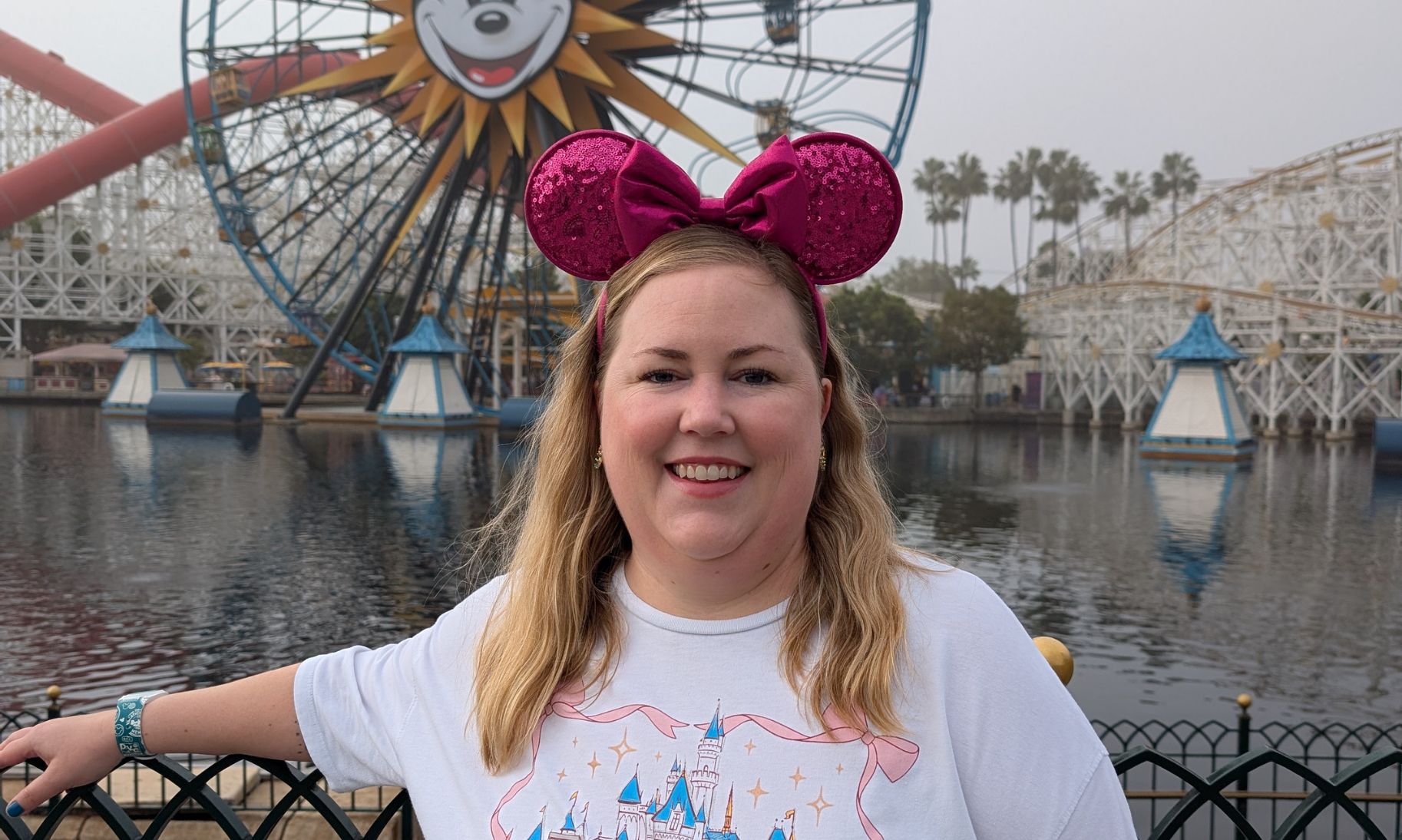
My name is Lynda; I’m a MiniMed Champion, MiniMed employee, and self-proclaimed Disney adult. I’ve been a long-time lover of all things Disney, especially the theme parks. When I was diagnosed with type 1 diabetes, my annual trips didn’t change but how I approached them did. I’m here to share some of my best tips for enjoying a theme park trip when you live with diabetes.
Disney Parks are often described as the most magical places on Earth. From the music drifting down Main Street to the fireworks above the castle, there’s a sense of wonder that makes me feel like a kid again. But living with type 1 diabetes means experiencing that magic comes with a little extra planning.
Planning for your day
Before I even step through the gates, I like to make sure I am prepared for the unpredictable. I have the MiniMedTM 780G system, and I like to pack extra supplies like insulin, continuous glucose monitor backups, low snacks, and an extra infusion set. To me, this is just as essential as remembering my park tickets!
It might seem like a lot, but that preparation gives me more peace of mind and allows me to focus on enjoying the day.
Pro tip: If you need to change your site or CGM while at the park, head over to any of the available First Aid stations or Baby Care Centers for a quiet area to get this done.
First attraction: Security
If you’ve ever been to a park, you know that security screening is usually the first stop for any guest entering the parks. With my insulin pump and CGM, these can sometimes be intimidating – you never know how the security officers will react to your devices. On my latest trip, the security checkpoint utilized metal detectors. Luckily, both my MiniMedTM 780G system and Simplera SyncTM sensor were cleared to go through a metal detector.
I would highly recommend familiarizing yourself with the equipment interference guide for your devices to know what to expect when going through security. In almost all cases, you can request an alternate screening, which I have done before with ease.
Counting steps? I’ve lost track!
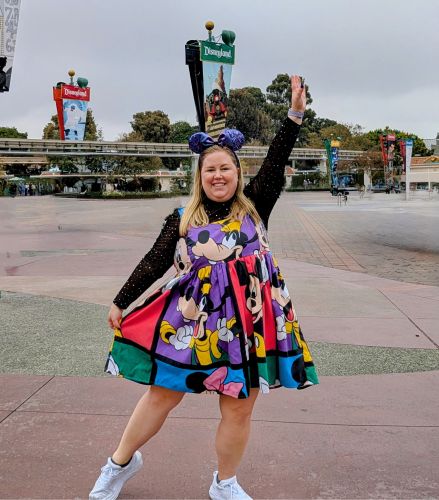
One of the biggest challenges for me at the parks is how much my body is constantly moving. I can get 25,000+ steps in just one day! I keep a close eye on my glucose while at the parks and use features like Temp Target on my MiniMed 780G system to help keep me in range.
I make it a habit to peek at my glucose level each time we enter the queue for a new ride. This way, I can keep in touch with my glucose and act if I need to. Really, frequent sugar checks and trusting my instincts have become part of the experience for me.
Enjoy the amazing food
I don’t think you can really enjoy the Disney Parks without trying the incredible food options. (My favorite from my last trip was the Filipino Feast burrito from Studio Catering Co.)
From Mickey-shaped pretzels to themed desserts, Disney offers endless options, and handling these with type 1 diabetes can sometimes be a puzzle. I like to preview the menu options with the park app.
With the mobile order feature, I can better predict my mealtimes and plan my bolus accordingly. The app is also great to use if you have allergies or other dietary requirements. If I mess up a carb count, I know that all the walking I am about to do (and my insulin pump) will help get me back on track.†
It’s okay to ask for help
One often overlooked benefit of Disney Parks is how accommodating the employees are. (Fun fact: Disney calls their employees “Cast Members.”)
When in doubt, I ask a Cast Member. Whether I need to step out of line to handle a low or if I need to find the closest First Aid station to change my site, Cast Members are trained to assist guests with medical needs. The customer service I have received at Disney Parks really adds a layer of comfort to my trips – I know that I have backup to my backup. (Shout out to my husband!)
Takeaway
Visiting Disney Parks with type 1 diabetes is a reminder that magic isn’t about perfection—it’s about being adaptable. It’s about finding happiness even when plans change and celebrating small victories. Diabetes may shape the way I experience Disney now, but it doesn’t limit the wonder, excitement, or memories my family and I create.
At the end of the day, riding my favorite ride or hugging my favorite character feels just as magical—diabetes and all. ✨
Frequently asked questions
Can I bring insulin into Disney Parks?
I did not have any issues bringing in my insulin and essential diabetes supplies into the parks.
At my last visit, my diabetes supplies were not listed on the Disneyland prohibited items list. However, you should contact your own review of the website before your visit for the latest information regarding the park’s policy and your particular diabetes supplies.
Do insulin pumps go through Disneyland security?
Everyone is required to go through security, but you can typically ask for a manual inspection instead of going through the metal detector.
What should I do if my blood sugar goes low while waiting in line?
It’s always a good idea to have low snacks on hand in case you experience low blood sugar. If you don’t, you can alert a Cast Member for assistance.
What should I pack to avoid lows during long lines?
Check out this infographic for some options to follow the 15-15 rule for treating low blood sugar.
Footnotes
† Refers to SmartGuardTM technology. Individual results may vary.
Important Safety Information: MiniMedTM 780G system with SmartGuardTM technology with Simplera SyncTM sensor
The MiniMedTM 780G system is intended for the continuous delivery of basal insulin at selectable rates, and the administration of insulin boluses at selectable rates for the management of type 1 diabetes mellitus in persons 7 years of age and older, and of type 2 diabetes mellitus in persons 18 years of age and older requiring insulin. The system is also intended to continuously monitor glucose values in the fluid under the skin. The MiniMedTM780G system includes SmartGuard™ technology, which can be programmed to automatically adjust insulin delivery based on continuous glucose monitoring (CGM) sensor glucose values and can suspend delivery of insulin when the SG value falls below or is predicted to fall below predefined threshold values.
The Simplera SyncTM sensor can be used one time and has a life up to 6 days, followed by a grace period of 24 hours. During the grace period, the sensor will continue to work as it did during the first 6 days, to allow the patient to change their sensor more flexibly. However, some sensors may not survive the full wear period for a variety of reasons. Please be prepared to replace the sensor during the grace period to ensure sensor glucose values continue to be monitored.
The Simplera SyncTM sensor is not intended to be used directly to make therapy adjustments while the MiniMedTM 780G is operating in manual mode. All therapy adjustments in Manual mode should be based on measurements obtained using a blood glucose meter and not on values provided by the Simplera SyncTM sensor. The Simplera Sync™ sensor has been studied and is approved for use in patients ages 7 years and older and in the arm insertion site only. Do not use the Simplera Sync™ sensor in the abdomen or other body sites, including the buttocks, due to unknown or different performance that could result in hypoglycemia or hyperglycemia.
The Medtronic MiniMed™ 780G System consists of the following devices: MiniMedTM 780G Insulin Pump, Simplera SyncTM sensor, the Accu-ChekTM Guide Link blood glucose meter, and the Accu-ChekTM Guide Test Strips. The system requires a prescription from a healthcare professional.
WARNING: Do not use the SmartGuardTM feature for people who require less than 8 units or more than 250 units of total daily insulin per day. A total daily dose of at least 8 units, but no more than 250 units, is required to operate in the SmartGuardTM feature.
WARNING: Do not use the MiniMedTM 780G system until appropriate training has been received from a healthcare professional. Training is essential to ensure the safe use of the MiniMed™ 780G system.
WARNING: Do not use SG values to make treatment decisions, including delivering a bolus, while the pump is in Manual Mode. When the SmartGuardTM feature is active and you are no longer in Manual Mode, the pump uses an SG value, when available, to calculate a bolus amount. However, if your symptoms do not match the SG value, use a blood glucose (BG) meter to confirm the SG value. Failure to confirm glucose levels when your symptoms do not match the SG value can result in the infusion of too much or too little insulin, which may cause hypoglycemia or hyperglycemia.
Pump therapy is not recommended for people whose vision or hearing does not allow for the recognition of pump signals, alerts, or alarms. The safety of the MiniMedTM 780G system has not been studied in pregnant women or in persons using other anti-hyperglycemic therapies that do not include insulin. For complete details of the system, including user guides and important safety information such as indications, contraindications, warnings and precautions associated with system and its components, see https://link.minimed.com/Risks.