What to do when your child has been diagnosed with type 1 diabetes

What is diabetes?

When your child has type 1 diabetes, their pancreas makes little or no insulin.1 Insulin is a hormone that helps the body convert blood sugar into energy. Because the body needs insulin to live, your child will need to take it daily, either by insulin injection or with an insulin pump.2 It's important to check your child's glucose levels to make sure they don't go too high or too low and work towards keeping them in the target range throughout the day.

Time in Range (TIR) is the percentage of time the blood sugar levels stay within a predetermined range for people with diabetes. The standard target glucose range is 70–180 mg/dL and the ADA recommends people with diabetes aim to stay in this range at least 70% of the time.3 The more time your child spends in range, the more likely they are to feel good and prevent complications of diabetes.

Managing diabetes - tips for parents of newly diagnosed children

As a parent, you do everything you can to protect your children. When your child is diagnosed with type 1 diabetes, you may feel helpless and scared. As you begin your diabetes journey, learning more about the condition, as well as what to expect, can help ease your mind and build confidence.

Educate yourself - Living with diabetes will be a learning experience for both you and your child. Here at MiniMed, we have ample resources that can help you learn more about this condition. Talk to your child’s healthcare team, as they can also direct you to education and support services.

Discover treatment options - Diabetes technology can help make managing your child’s diabetes easier. Whether you’re interested in a smart insulin pen system or automated insulin delivery, MiniMed offers integrated systems that do more of the work of managing diabetes.

Join a community - There are millions of people living with diabetes all over the world, and you may even have a friend or family member who has their own connection to diabetes! The #MiniMedChampion community is a great place to connect with others who have similar experiences.

Insulin pump for type 1 diabetes

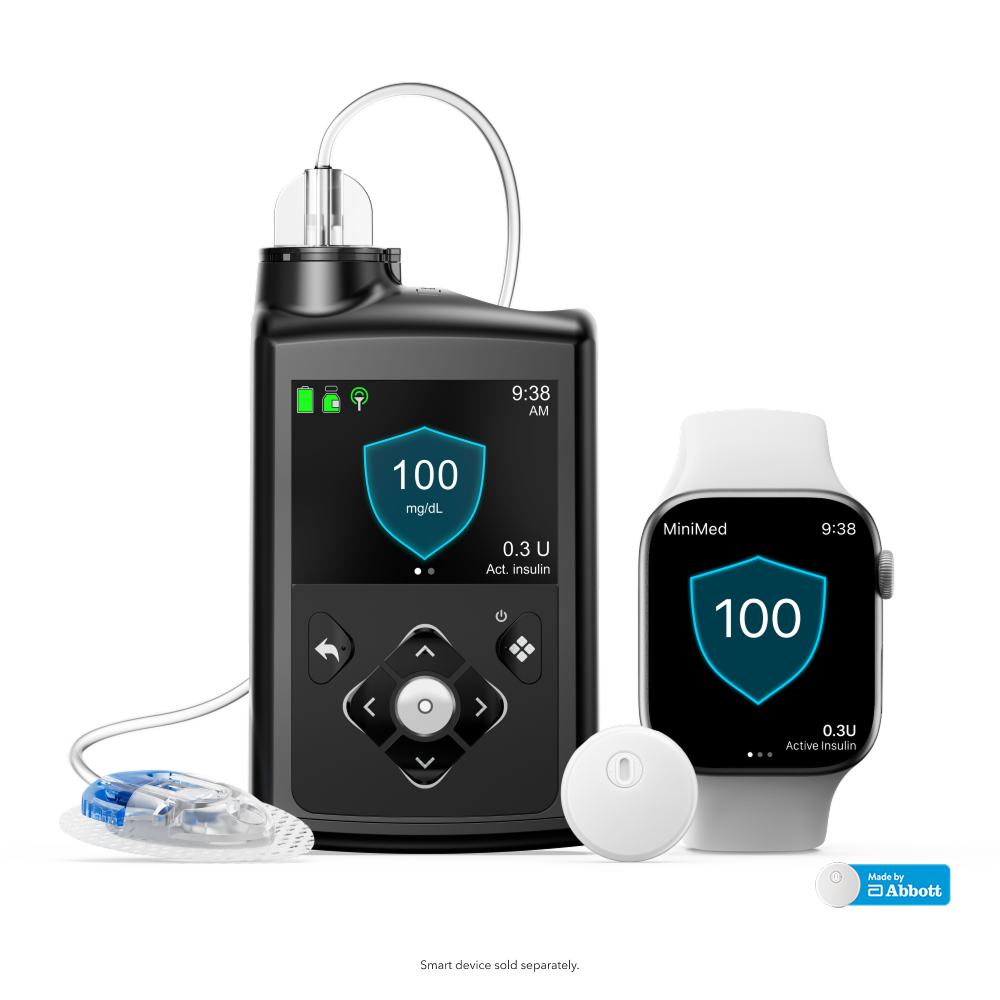
Automated insulin delivery (AID) systems combine an insulin pump with continuous glucose monitoring (CGM) to help detect changes in your child’s sugar levels in real time and automatically adjust insulin doses in response.

The MiniMedTM 780G system

Not all AID systems are created equal. Only the MiniMedTM 780G system with Meal DetectionTM technology* can automatically deliver correction doses of insulin every 5 minutes,§ without any work needed from you.

Parents typically choose AID systems to manage their child’s diabetes because they're looking for technology that can work 24/7 to keep their child's levels in range. It works in the background around the clock so you and your child can focus more on living life.

With the MiniMedTM 780G system, it works for you all day and night. In fact, 95 percent of customers felt more freedom from having to think so much about their diabetes.+^4
Considering the MiniMedTM 780G system for your child?

|

Footnotes

* Taking a bolus 15 – 20 minutes before a meal helps to keep blood sugar levels under control after eating.
§ Refers to SmartGuard™ feature. Individual results may vary.
+ Comparison of MiniMed™ 780G system vs. MiniMed™ 670G system.
^ Individual results may vary.

References

  1. Type 1 diabetes. The Mayo Clinic Page. https://www.mayoclinic.org/diseases-conditions/type-1-diabetes/symptoms-causes/syc-20353011
  2. Just Diagnosed With Type 1 Diabetes. The Centers for Disease Control and Prevention Page. https://www.cdc.gov/diabetes/signs-symptoms/just-diagnosed-type-1.html
  3. CGM & Time in Range. American Diabetes Association. Available at: https://diabetes.org/tools-support/devices-technology/cgm-time-in-range
  4. Data on file from Diabetes Effort Metric Survey: Surveyed MiniMed™ 780G system Install Base who switched from MiniMed™ 670G system: Survey Results, N=74 2023, EMEA.

Important Safety Information: MiniMedTM 780G system with SmartGuardTM technology with Instinct sensor  

The MiniMedTM 780G system is intended for continuous delivery of basal insulin at selectable rates, and the administration of insulin boluses at selectable amounts for the management of type 1 diabetes mellitus in persons 7 years of age and older, and of type 2 diabetes mellitus in persons 18 years of age and older requiring insulin. The system is also intended to continuously monitor glucose values in fluid under the skin. The MiniMedTM 780G System includes SmartGuard™ technology, which can be programmed to automatically adjust insulin delivery based on the continuous glucose monitoring (CGM) sensor glucose values and can suspend delivery of insulin when the sensor glucose (SG) value falls below or is predicted to fall below predefined threshold values. 

The Instinct sensor can be used one time and has a life up to 15 days. The Instinct sensor is not intended to be used directly to make therapy adjustments while the MiniMedTM 780G system is operating in manual mode. All therapy adjustments in Manual mode should be based on measurements obtained using a blood glucose meter and not on values provided by the Instinct sensor. The Instinct sensor has been studied and is approved for use in patients ages 7 years and older and in the arm insertion site only. Only apply the sensor to the back of your upper arm. The sensor may not work properly in other areas. 

The Medtronic MiniMedTM 780G System consists of the following devices: MiniMedTM 780G Insulin Pump and the Instinct sensor. The system requires a prescription from a healthcare professional.

WARNING: Do not use the SmartGuardTM feature for people who require less than 8 units or more than 250 units of total daily insulin per day. A total daily dose of at least 8 units, but no more than 250 units, is required to operate in the SmartGuardTM feature.

WARNING: Do not use the MiniMedTM 780G system until appropriate training has been received from a healthcare professional. Training is essential to ensure the safe use of the MiniMedTM 780G system.

WARNING: Do not use SG values to make treatment decisions, including delivering a bolus, while the pump is in Manual Mode. When the SmartGuardTM feature is active and you are no longer in Manual Mode, the pump uses an SG value, when available, to calculate a bolus amount. However, if your symptoms do not match the SG value, use a blood glucose (BG) meter to confirm the SG value. Failure to confirm glucose levels when your symptoms do not match the SG value can result in the infusion of too much or too little insulin, which may cause hypoglycemia or hyperglycemia.

Pump therapy is not recommended for people whose vision or hearing does not allow for the recognition of pump signals, alerts, or alarms. The safety of the MiniMedTM 780G system has not been studied in pregnant women or in persons using other anti-hyperglycemic therapies that do not include insulin. For complete details of the system, including product and important safety information such as indications, contraindications, warnings and precautions associated with system and its components, please consult https://www.minimed.com/important-safety-information#minimed-780g-instinct and the appropriate user guide at https://www.minimed.com/resources