.png)


Time in Range
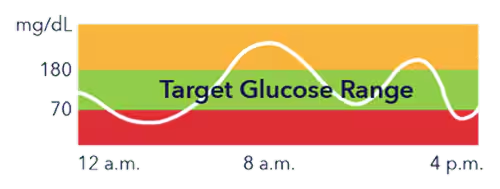
Time in Range (TIR) is the percentage of time the blood sugar levels stay within a predetermined range for people with diabetes. The standard target glucose range is 70–180 mg/dL.1 TIR provides a more comprehensive picture of blood sugar over a period of time.
It is recommended to maintain a blood glucose, or glycemic, range of 70mg/dL (low) -180 mg/dL (high) at least 70% of time.1,3
The goal with diabetes management is to increase time spent in this target range and to minimize high and low sugar levels. Doing this can reduce the risk of both immediate and long-term health complications.
Thinking beyond A1C
A1C is an average that does not capture many important variables, including time spent high or low.
A1C versus Time in Range
A1C is the average of a person’s blood sugars over the past ninety days. The American Diabetes Association recommends that adults with diabetes should have an A1C less than 7%. This translates to an average blood sugar of 154 mg/dL.3
"What is your A1C?"
"Are you happy with your A1C?"
People living with diabetes are often faced with these questions. A1C is an average and does not give the full picture. It does not capture many important variables. It also masks the occurrence and frequency of dangerous highs and lows.
TIR provides additional insights beyond A1C. TIR provides visibility into how much time a person spends in high and low glucose levels throughout the day. It identifies day-to-day changes in blood sugar and helps people see how much time they’re spending in that healthy, feel-good range. People with similar A1C’s, might have very different blood glucose levels.
More Time in Range means less severe highs and lows.

Time in Range and the MiniMedTM 780G system
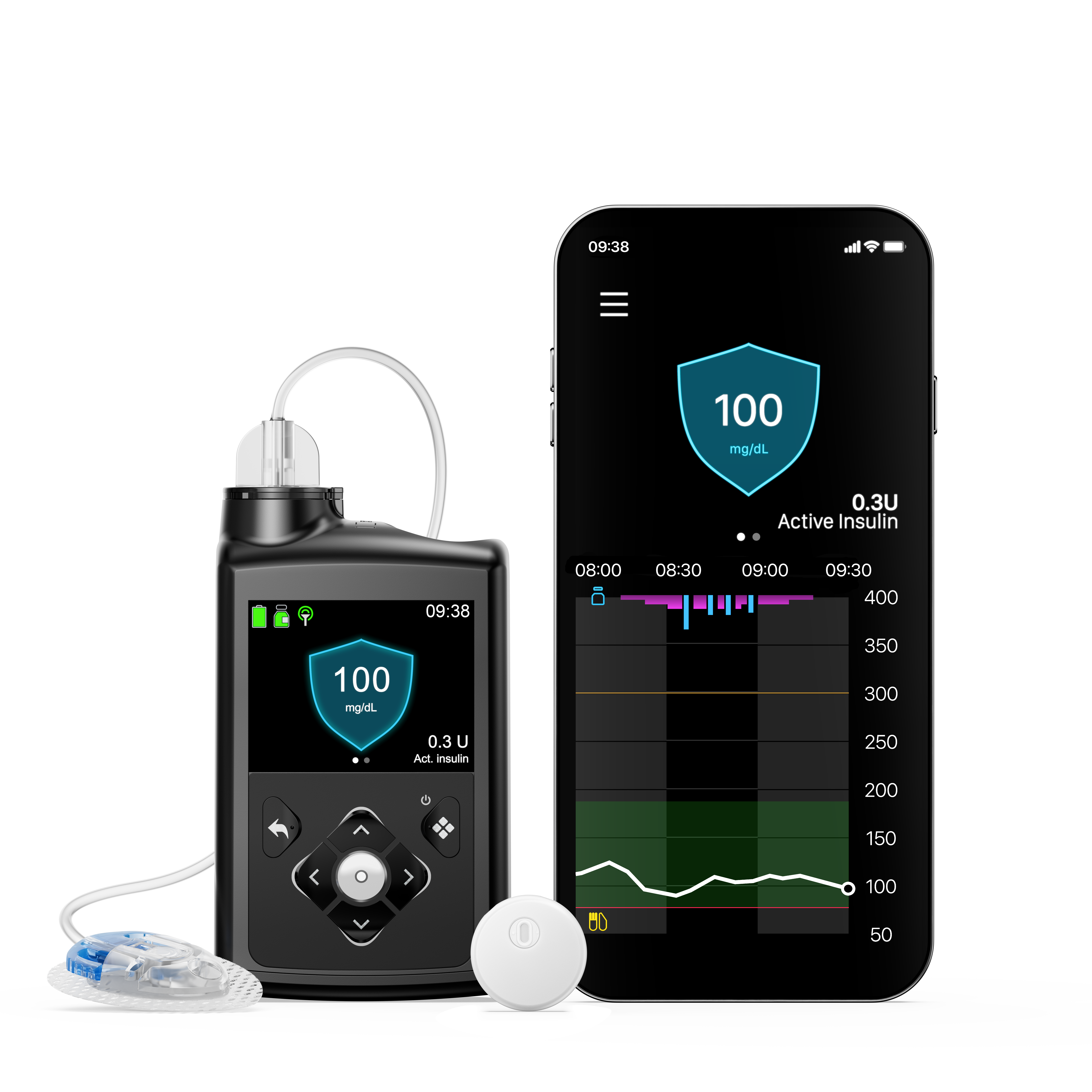
Real-world results showed patients achieved up to 80% TIR with recommended settings, without increasing lows.*,4
Why is Time in Range important?
Managing blood sugar by focusing on the time spent “in range” versus the overall average can improve quality of life because it can help reduce time spent worrying. Unpredictable glucose levels have a significant negative impact on daily life for 40% of people using multiple daily injections (MDI) to manage their diabetes.5
More than half of people with diabetes are worried about the risk of hypoglycemia (low blood sugar).6
Time in Range goals
In 2019, an international panel of clinicians, researchers, and people with diabetes met and established these goals.7
- Greater than 70% of time should be spent between 70 mg/dL and 180 mg/dL
- Less than 25% of time should be spent higher than 180 mg/dL
- Less than 4% of time should be spent below 70 mg/dL
- Less than 1% of time should be spent below 54 mg/dL
This gives people living with diabetes and healthcare professionals a tool to measure what diabetes management looks like and a target to strive for. Ideal TIR can vary from one person to another depending on factors such as medication, diabetes type, age, and health.
References
* Recommended settings in adults: SmartGuard™ target: 100 mg/dL, 2 hr AIT, ages <=15: Start at SmartGuard™ target: 110mg/Dl and reduce to 100 mg/Dl if no hypos, 2 hr AIT
1. CGM & Time in Range. American Diabetes Association. Available at: https://diabetes.org/tools-support/devices-technology/cgm-time-in-range. Accessed June 19, 2023.
2. Time In Range – https://diatribe.org/time-range. Accessed 9 February 2021.
3. American Diabetes Association (2019). Standards of medical care in diabetes—2019. Diabetes Care, 42(Suppl 1): S61-S70.
4. Choudhary P. et al, Lancet Diabetes Endocrinol. 2022; https://doi.org/10.1016/ S2213-8587(22)00245-5
5. Kaufman FR, Gibson LC, Halvorson M, et al. A pilot study of the continuous glucose monitoring system. Diabetes Care. 2001;24(12):2030-2034.
6. Nicolucci A, Kovacs Burns K, et al. Research: Educational and Psychological Issues Diabetes Attitudes, Wishes and Needs second study. Diabet Med. 2013;30:767–777.
7. Tadej Battelino, Thomas Danne, Richard M. Bergenstal et al. Clinical Targets for Continuous Glucose Monitoring Data Interpretation: Recommendations from the International Consensus on Time-in-Range” in Diabetes Care 2019 Aug; 42(8): 1593-1603.
Important Safety Information: MiniMedTM 780G system with SmartGuardTM technology with Instinct sensor, Simplera SyncTM sensor, and GuardianTM 4 sensor
The MiniMedTM 780G system is intended for the continuous delivery of basal insulin at selectable rates and the administration of insulin boluses at selectable rates for the management of type 1 diabetes mellitus in persons 7 years of age and older, and of type 2 diabetes mellitus in persons 18 years of age and older requiring insulin. The system is also intended to continuously monitor glucose vales in the fluid under the skin.
The MiniMedTM 780G System includes SmartGuardTM technology, which can be programmed to automatically adjust insulin delivery based on the continuous glucose monitoring (CGM) sensor glucose values and can suspend delivery of insulin when the sensor glucose (SG) value falls below or is predicted to fall below predefined threshold values. The system is intended for use with connected sensors, including the Simplera SyncTM and GuardianTM 4 sensors and integrated continuous glucose monitors, including the Instinct sensor, each of which has different wear-time, form factor, insertion site, and other distinguishing characteristics that relate to sensor performance. Consult the appropriate sensor user guide when using the system. Discuss treatment decisions with your HCP.
WARNING: Do not use the SmartGuardTM feature for people who require less than 8 units or more than 250 units of total daily insulin per day. A total daily dose of at least 8 units, but no more than 250 units, is required to operate in the SmartGuardTM feature.
WARNING: Do not use MiniMedTM 780G system until appropriate training has been received from a healthcare professional. Training is essential to ensure the safe use of MiniMedTM 780G system.
WARNING: Do not use SG values to make treatment decisions, including delivering a bolus, while the pump is in Manual Mode. When the SmartGuardTM feature is active and you are no longer in Manual Mode, the pump uses an SG value, when available, to calculate a bolus amount. However, if your symptoms do not match the SG value, use a blood glucose (BG) meter to confirm the SG value. Failure to confirm glucose levels when your symptoms do not match the SG value can result in the infusion of too much or too little insulin, which may cause hypoglycemia or hyperglycemia.
Pump therapy is not recommended for people whose vision or hearing does not allow for the recognition of pump signals, alerts, or alarms. The safety of the MiniMedTM 780G system has not been studied in pregnant women or in persons using other anti-hyperglycemic therapies that do not include insulin. For complete details of the system, including user guides and important safety information such as indications, contraindications, warnings and precautions associated with system and its components, see https://link.minimed.com/Risks.
©2026 Medtronic MiniMed, Inc. MiniMed and MiniMed logo are trademarks of Medtronic MiniMed, Inc. The sensor shape and appearance, Abbott, and “a” logo are marks and/or designs of the Abbott group of companies in various territories and used under license. Sensor image ©2026 Abbott. TM*Third–party brands are trademarks of their respective owners.
DreaMed Diabetes is a trademark of DreaMed Diabetes, Ltd. The MiniMedTM 780G system algorithm includes technology developed by DreaMed Diabetes.