.png)


Get the most out of your GuardianTM 4 sensor
Tips for your GuardianTM 4 sensors
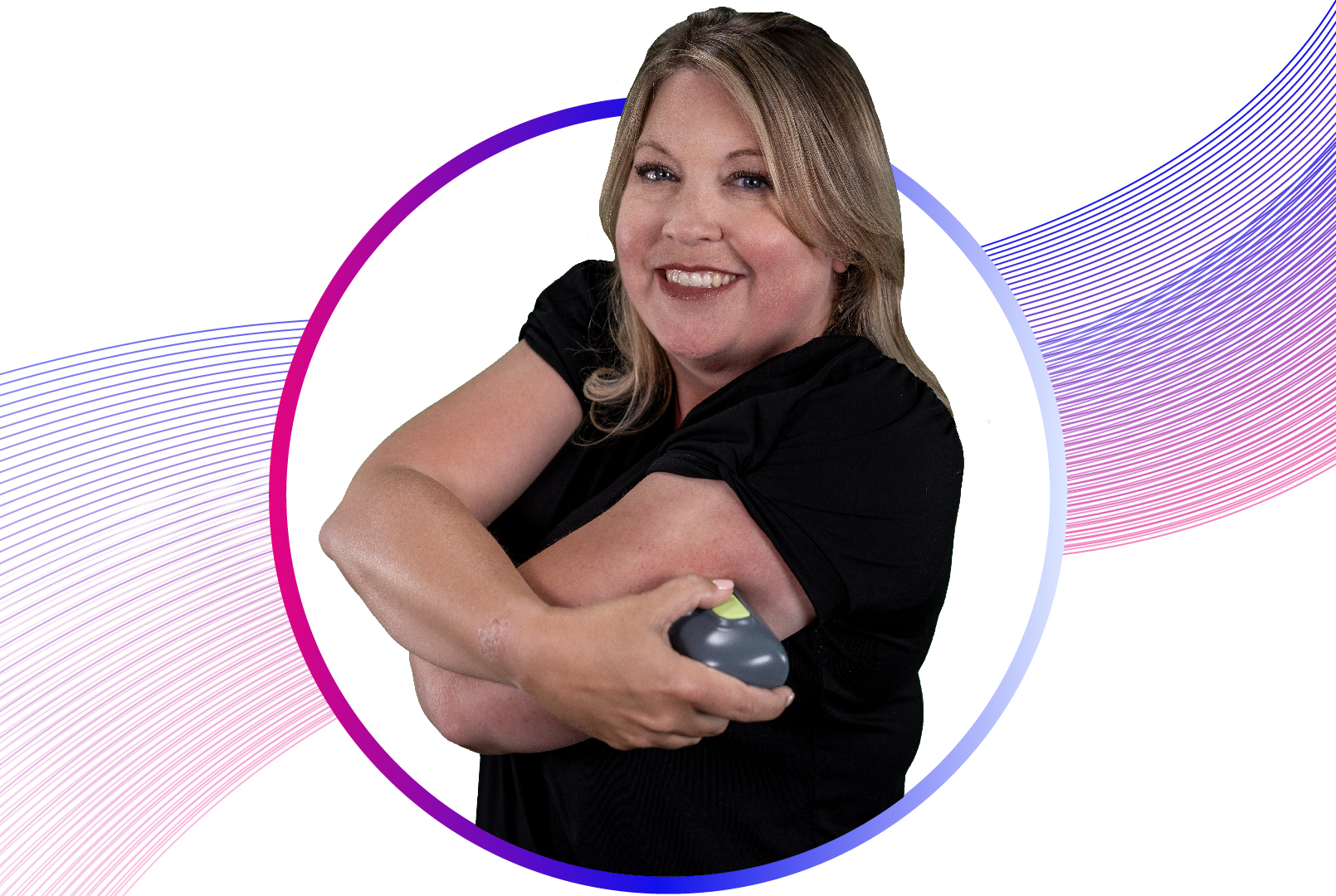
I’m Cheryl, a Medtronic employee living with type 1 diabetes for 35 years. As a longtime pump and CGM wearer, I understand the frustration of having to change a sensor unexpectedly. While we can’t plan for everything, I would love to share some tips to help your sensor last longer and make things a little more predictable.
1. Where you place your CGM matters
For many of us, we get comfortable using our same spots for infusion sets and sensors, and hey, “If it ain’t broke, don’t fix it.” But that’s not the case with the Guardian™ 4 sensor.
Wearing your Guardian™ 4 sensor on the back of your upper arm plays a big part in providing the best possible experience when it comes to sensor life. Choose a flat area on the back of your upper arm where you can “pinch an inch” that’s also free of scar tissue.
If you’re having trouble inserting your sensor, try standing in front of a mirror or ask a care partner, friend, or family member for help. Check out this video for additional instruction on CGM arm insertion. And while it might not always feel natural to ask for help, I am always shocked how happy my friends and family are to lend a quick hand.
2. Practice good skin prep
It’s a little step that can easily be missed when you’ve been managing diabetes for a while, but it can make all the difference when it comes to getting the most out of your sensor life. Make sure your skin is clean and dry before insertion. Many soaps and body washes contain oils that can make it harder for your adhesives to stick, so clean your skin with an alcohol swab to ensure the adhesive sticks properly and lasts longer. Let that area air-dry for about 5 seconds to make sure that you don’t have any issues with your tape sticking.
3. Hold the sensor in place when removing the needle
It can be easy to rush removing the needle from the sensor, but make sure to hold the sensor firmly in place. If your sensor is pulled out slightly when you remove the needle, it could impact sensor performance.
4. Let overtape be your best friend
Your Guardian™ 4 sensors come with two pieces of Oval Tape to help secure your sensor, and for many people, that is enough. Personally, I really like putting on additional overtape after I have put on my Oval Tape. Here are the quick steps I follow after I’ve inserted the sensor:
- Remove the sensor needle.
- Place my first piece of Oval Tape over the sensor, making sure not to cover where the transmitter needs to connect
- Connect my transmitter.
- Place my second piece of Oval Tape, this time mirroring the first piece of tape so the second covers the transmitter.
- Place my overtape on top.
Overtape really helps keep that sensor secure, makes it look a little more discreet (however, I do love to pick a bright pink one in the summer!) and helps clothes slide over the sensor and prevent catching. Shop tapes on our online shop.
5. Do not fear if “Sensor Updating” appears
“Sensor updating” can really make those who have been wearing a CGM for a while cringe. But it’s different with the Guardian™ 4 sensor!
With this sensor, it’s simply a safety feature that’s most likely to happen on the first day. There’s nothing you need to do unless your pump alerts you. Most of the time, it resolves on its own within an hour. If it lasts for more than three hours, replace the sensor, and get in touch with Medtronic for help.✝ I have become much more comfortable with it now that I have been using the Guardian™ 4 sensor and typically plan a little time for it to occur on day one… but the algorithm is worth it!
Pro tip: As long as you are getting 6 days out of a Guardian™ 4 sensor, 1 box should last you an entire month. Each box of Guardian™ 4 sensors come with 5 sensors per box. Given at least a 6-day wear, a box will last one month. If a sensor fails before 6 days, you can request a replacement online.
These tips should help you make your sensor last and contribute to better performance. Which of them was most helpful to you? Let us know in the comments!
Footnotes
✝ Monitor BG with a meter for treatment decisions.