.png)


Get the most out of your Instinct sensor, made by Abbott
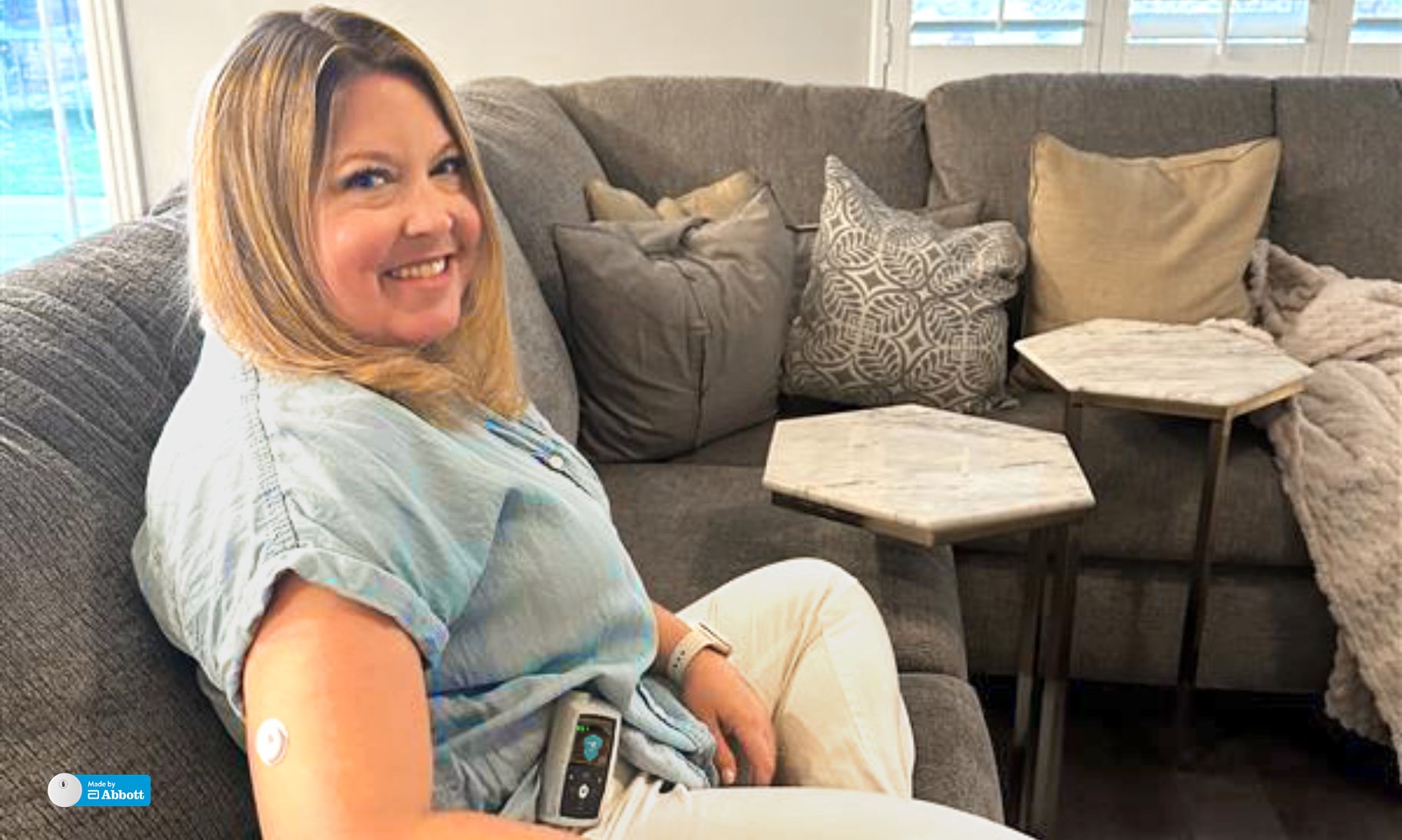
Excited to try the Instinct sensor
There’s nothing quite like the excitement of trying new diabetes technology!
I’m Cheryl, a MiniMed employee living with type 1 diabetes for over 30 years, and receiving my Instinct sensors, made by Abbott, was definitely a highlight for me. It was time to say goodbye to my old transmitter, extra tape, and inserter and hello to longer wear and a smaller sensor that includes the transmitter.
I’d like to share some things I learned from my experience with the Instinct sensor.
Applying the sensor is very simple
I’ve been using MiniMed CGMs for a while and sensor insertion could sometimes feel a bit complicated. With Instinct, the process is refreshingly easy. In just a few simple steps I was done in less time than my previous CGM!
I’ll admit, I followed the instructions closely for my first few sensors because it almost seemed too simple. If you ever struggled with one-handed insertion using Guardian™ sensors, you’ll love how effortless Instinct is.
The sensor graph looks different
For me, “new sensor day” used to mean waiting out a 2-hour warm up, which sometimes sent my blood glucose on a little rollercoaster. Instinct’s 1-hour warm up makes the transition so much smoother, and I’ve found it’s easier to get back into SmartGuard™ quickly.
Plus, the Instinct sensor sends glucose updates more often than other sensors. You might notice your sensor graph looks a little bumpier or less smooth — that’s just because you’re getting even more real-time information.
This caught me off guard at first, but I know the system still uses the same Smart Guard™ technology to keep my glucose levels steady, and the data hasn’t changed but my view of the data had.†
Get up to 15 days of wear
Go from changing my CGM from 6-7 days to every two weeks? Yes, please! Fewer changes mean fewer pokes, less to carry, and less to keep track of. As a working mom, I can appreciate that!
When it’s time to change your sensor, just open the MiniMed™ Mobile app to get started —the pump will even remind you when there’s one day left, so you don’t have to keep track. If you need some additional tips about keeping your sensor on for 15 days, check out the Instinct sensor application guide.
Be sure to wear your MiniMed 780G pump and Instinct sensor on the same side of your body. This helps them “talk” to each other and share real-time information. Your infusion set can be worn on either side, so you have flexibility.
Takeaway: find your rhythm
Of course, every new technology comes with a bit of a learning curve. It took me a couple of weeks to really sync up with Instinct. I checked my blood glucose with my meter occasionally and paid close attention during those first few weeks. But just like with anything new, you find your groove and things smooth out.
If you’re considering switching to Instinct, I hope my experience helps you feel confident and excited about what’s ahead!
† Individual results may vary
Important Safety Information: MiniMedTM 780G system with SmartGuardTM technology with Instinct sensor, Simplera SyncTM sensor, and GuardianTM 4 sensor
The MiniMedTM 780G system is intended for the continuous delivery of basal insulin at selectable rates and the administration of insulin boluses at selectable rates for the management of type 1 diabetes mellitus in persons 7 years of age and older, and of type 2 diabetes mellitus in persons 18 years of age and older requiring insulin. The system is also intended to continuously monitor glucose vales in the fluid under the skin.
The MiniMedTM 780G System includes SmartGuardTM technology, which can be programmed to automatically adjust insulin delivery based on the continuous glucose monitoring (CGM) sensor glucose values and can suspend delivery of insulin when the sensor glucose (SG) value falls below or is predicted to fall below predefined threshold values. The system is intended for use with connected sensors, including the Simplera SyncTM and GuardianTM 4 sensors and integrated continuous glucose monitors, including the Instinct sensor, each of which has different wear-time, form factor, insertion site, and other distinguishing characteristics that relate to sensor performance. Consult the appropriate sensor user guide when using the system. Discuss treatment decisions with your HCP.
WARNING: Do not use the SmartGuardTM feature for people who require less than 8 units or more than 250 units of total daily insulin per day. A total daily dose of at least 8 units, but no more than 250 units, is required to operate in the SmartGuardTM feature.
WARNING: Do not use MiniMedTM 780G system until appropriate training has been received from a healthcare professional. Training is essential to ensure the safe use of MiniMedTM 780G system.
WARNING: Do not use SG values to make treatment decisions, including delivering a bolus, while the pump is in Manual Mode. When the SmartGuardTM feature is active and you are no longer in Manual Mode, the pump uses an SG value, when available, to calculate a bolus amount. However, if your symptoms do not match the SG value, use a blood glucose (BG) meter to confirm the SG value. Failure to confirm glucose levels when your symptoms do not match the SG value can result in the infusion of too much or too little insulin, which may cause hypoglycemia or hyperglycemia.
Pump therapy is not recommended for people whose vision or hearing does not allow for the recognition of pump signals, alerts, or alarms. The safety of the MiniMedTM 780G system has not been studied in pregnant women or in persons using other anti-hyperglycemic therapies that do not include insulin. For complete details of the system, including user guides and important safety information such as indications, contraindications, warnings and precautions associated with system and its components, see https://link.minimed.com/Risks.
©2026 Medtronic MiniMed, Inc. MiniMed and MiniMed logo are trademarks of Medtronic MiniMed, Inc. The sensor shape and appearance, Abbott, and “a” logo are marks and/or designs of the Abbott group of companies in various territories and used under license. Sensor image ©2026 Abbott. TM*Third–party brands are trademarks of their respective owners.
DreaMed Diabetes is a trademark of DreaMed Diabetes, Ltd. The MiniMedTM 780G system algorithm includes technology developed by DreaMed Diabetes.