.png)


MiniMed Go system vs. traditional MDI: What's the difference?
Published: 30 July, 2026. Read time: 6 mins

If you or someone you love has diabetes, you've probably heard of multiple daily injections — or MDI for short. It's exactly what it sounds like: taking several insulin shots throughout the day.
Here's what a traditional MDI routine might look like:
| Time of day | What you do |
|---|---|
 Morning Morning | Check glucose, calculate insulin dose, inject |
 Before each meal Before each meal | Estimate carbs, calculate dose, inject again |
 Bedtime Bedtime | Check glucose, possibly inject long-acting insulin |
 Anytime Anytime | React to highs or lows — often without warning |
All of this before you factor in the mental math — counting carbs, guessing at doses, and hoping you got it right.
The biggest challenge? You're flying a little bit blind. Traditional finger sticks only tell you your glucose at that moment. They don't tell you if it's rising, falling, or stable.
Enter the MiniMed Go system: A smarter approach
The MiniMed Go system combines three powerful tools into one connected experience:
1. Smart insulin pen
This isn’t your average injection pen. It remembers every dose you take with the InPenTM — how much insulin, exactly when you took it, and how much insulin is still active in your body. No more guessing if you already took your lunchtime shot. No more mental diary.
2. Continuous glucose monitor (CGM)
Instead of pricking your finger multiple times a day, a continuous glucose monitor (CGM) is a small sensor worn on your body that checks your glucose automatically — every few minutes, around the clock. It shows you:
- When your glucose is going up
- When it's going down
- When it's staying steady
And it can alert you before a dangerous high or low hits.
The MiniMed Go system is compatible with the Instinct sensor, made by Abbott. The sensor is small, discreet1 and comfortable2 to wear. It can be worn for up to 15 days. MiniMed Go also works with the SimpleraTM sensor.
3. MiniMed Go app
The MiniMed Go app brings your glucose and insulin data together into one easy-to-use app. It helps you know when to take action and how much insulin to take.
Managing diabetes with injections has traditionally meant keeping track of doses yourself — or checking glucose and insulin information in separate apps — then figuring out what to do next. MiniMed Go is the only smart MDI system that brings glucose and insulin information together in one app, so it can do more than simply show you data.
If it looks like you missed a mealtime dose, a Missed Dose Alert lets you know and recommends how much insulin to take. If you took insulin but your glucose is still high, a Correct High Glucose Alert lets you know if more insulin may be needed and recommends a correction dose.
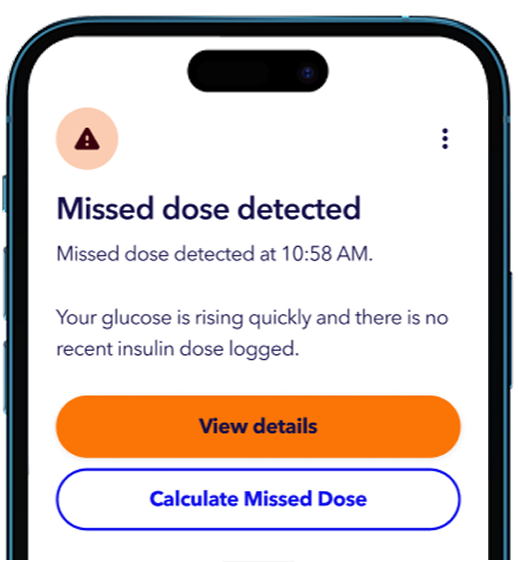
One connected view. Clear next steps. Less guesswork.
Side-by-side: traditional MDI vs. MiniMed Go
Here's where it gets really clear:
| Feature | Traditional MDI | MiniMed Go system |
|---|---|---|
| Glucose monitoring | Finger sticks (a few times a day) | Continuous, automatic readings every few minutes |
| Trend information | ❌ None | Shows if glucose is rising, falling, or stable |
| Dose tracking | Manual (easy to forget) | Automatically logged by smart insulin pen |
| Alerts for highs/lows | ❌ No warning system | Alerts sent to your phone or compatible device |
| Data for your doctor | Hard to track over time | Sharable reports showing patterns |
| Injections still required? | Yes | Yes |
| Peace of mind | 😟 Often uncertain | 😌 More informed, more confident |
Important to know: The MiniMed Go system still uses injections — it's not an insulin pump.
Why does this actually matter?
Let's break it down in real-life terms:
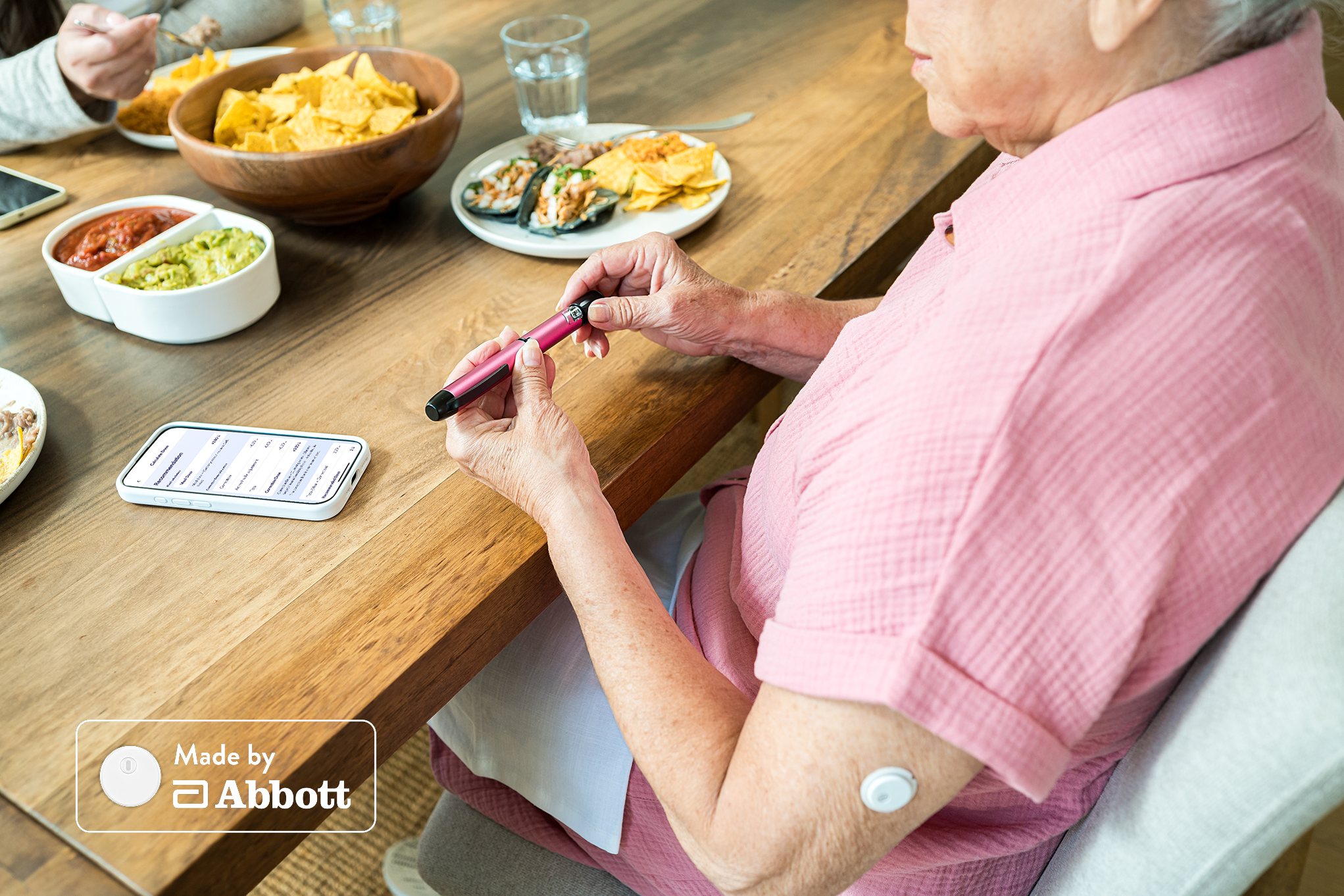
 Eating out with friends
With MDI alone: You guess your carbs, inject, and hope for the best. You might not know if your glucose is spiking until you feel it — or until it's a problem.
With MiniMed Go: Your CGM is tracking in real time. You can see your glucose trending up after that pizza slice and respond before it becomes a serious issue.
 Sleeping through the night
With MDI alone: You go to sleep and hope your levels stay stable. There's no alarm if your glucose drops dangerously low at 3 AM.
With MiniMed Go: The CGM watches while you sleep and can alert you — or even a parent or caregiver — if something looks wrong.
 Working out
With MDI alone: Exercise can cause unpredictable drops in glucose. It's hard to know when to eat a snack or adjust your dose.
With MiniMed Go: You can watch your glucose trend in real time during your workout and make smarter decisions.
The bottom line
Managing diabetes with multiple daily injections takes a lot of willpower, math, and guesswork. The MiniMed Go system doesn't eliminate injections — but it wraps them in a layer of intelligence that helps you:
- See what your glucose is doing all day and night
- Remember every InPen-administered dose automatically
- React faster to highs and lows
- Share data easily with your healthcare team
Talk to your doctor
Every person's diabetes journey is different. The MiniMed Go system may not be right for everyone, but it represents an exciting step forward in making diabetes easier to manage day to day.
If you're currently using multiple daily injections and want to know if MiniMed Go might help you, start the conversation with your healthcare provider.
References
1. Data on File, Abbott Diabetes Care, Inc.
2.Alva, Shridhara, Ronald Brazg, Kristin Castorino, Mark Kipnes, David R. Liljenquist, and Hanqing Liu. "Accuracy of the Third Generation of a 14-Day Continuous Glucose Monitoring System." Diabetes Therapy 14, no. 4 (2023): 767-776. https://doi.org/10.1007/s13300-023-01385-6.
©2026 Medtronic MiniMed Inc. MiniMed and MiniMed logo are trademarks of Medtronic MiniMed, Inc. The sensor shape and appearance, Abbott, and “a” logo, are marks and/or designs of the Abbott group of companies in various territories and used under license. Sensor image © 2026 Abbott. * Third–party brands are trademarks of their respective owners.
Important safety information: MiniMed Go system
The MiniMed Go system includes the MiniMed Go app, InPen smart insulin pen injector and either the Instinct continuous glucose monitoring (CGM) sensor or Simplera CGM sensor. The system is intended to aid in diabetes management through multiple daily injections of compatible rapid-acting insulins (Humalog, Novolog, or Fiasp). The app and system components each require a prescription. When used with Instinct CGM, the app is indicated for patients ages 7 years and older, or patients ages 2 to 6 years under the supervision of an adult caregiver. When used with Simplera CGM, the app is indicated for patients ages 18 and over. If using InPen alone, the app is intended for all ages, with patients under age 7 requiring supervision. Use of these systems requires, among other things, adequate hearing and vision, a compatible mobile device and operating system, an open app, adequate pairing and connectivity, proper setting, use of an approved rapid-acting insulin, mobile device battery power, proper settings, accurate manual logging of insulin doses administered by means other than InPen, and occasional blood glucose meter (BGM) readings. Establishment of settings and treatment decisions should be made in consultation with a healthcare professional and on the basis of a combination of glucose readings, trend arrows, glucose target, active alerts, and recent events (such as insulin doses, exercise, meals, and medications). Failure to observe these and other details as found in the user guides can result in incorrect dosing, missed alerts and notifications, and ultimately hypoglycemia or hyperglycemia, with serious injury or death possible. For additional safety information and user guides, see https://link.minimed.com/Risks.