.png)


My Active Life: That's a Flex!
Published: 23 July, 2026 - Read time: 6 mins

Meet Monique: Running her first marathon
Hi there, I’m Monique. I was diagnosed with type 1 diabetes 20 years ago, in October 2006. At the time, I was pretty active — I had been a cheerleader my whole life and continued to cheer post diagnosis. But once I got to college, my active lifestyle started to dwindle. By March 2026, my idea of exercise was walking the dogs or spending the day at Disneyland. Over the years I’d participated in a few Breakthrough T1D and Multiple Sclerosis walks. But running a marathon? That had never crossed my mind.
The moment that everything changed
In March 2026, I attended an event to celebrate the MiniMed IPO as a MiniMed Ambassador. I met a bunch of amazing people, including Jae Trevits, the president of Beyond Type 1.
I told her I wanted to do more in the community and become involved with Beyond Type 1. Her immediate response was “Run the New York Marathon with us.” I knew this would be a challenge, but one that I was ready to take on. One week later, I started training for a marathon.
Finding my stride
So far, training has been a lot easier than I expected. But learning to run without my usual safety net took some adjustment.
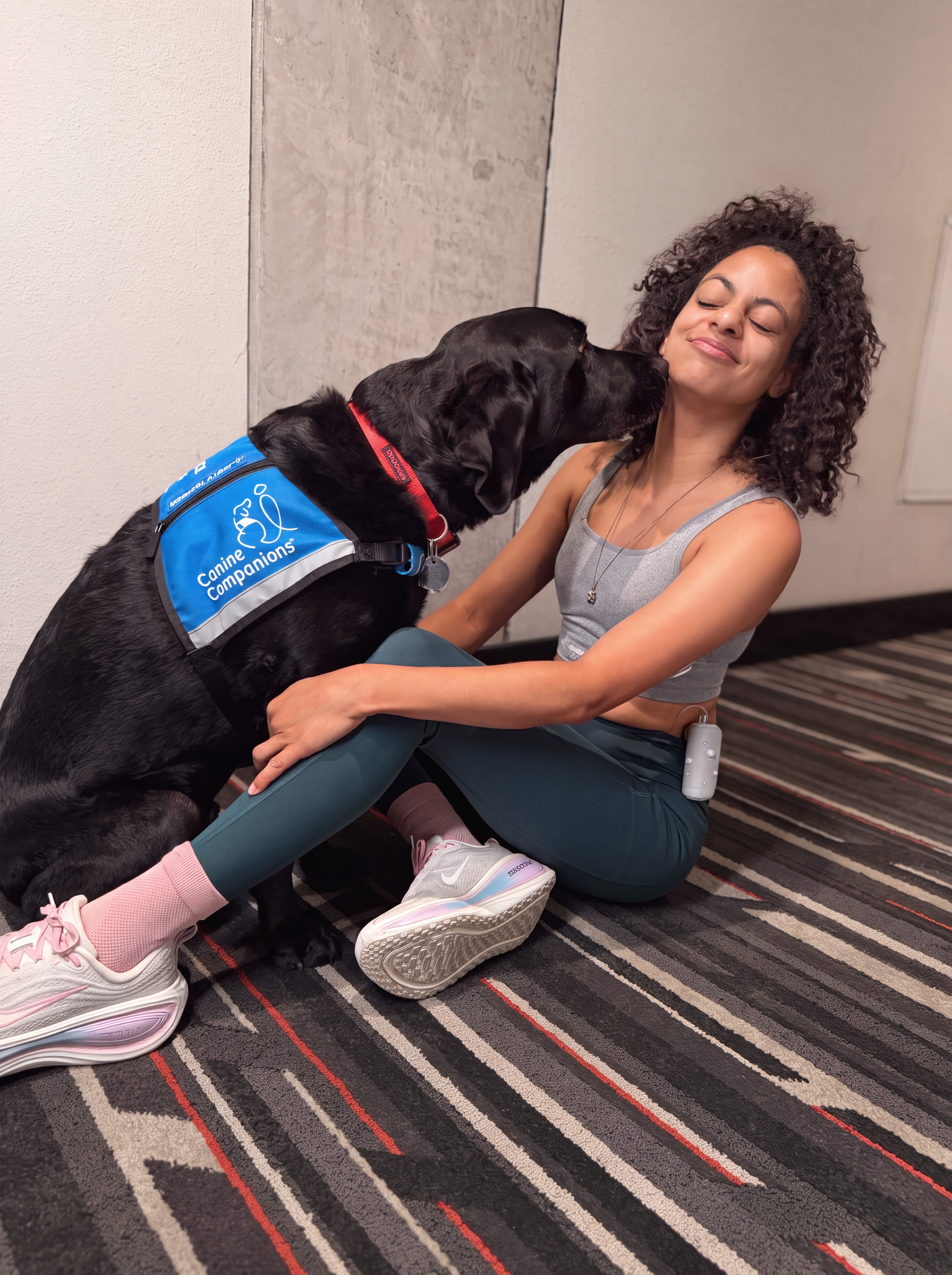
I have a diabetic alert dog named Jolo, and I rely on him a lot when it comes to managing my glucose levels. His alerts are about 15 minutes faster than any device — and he is not running with me, so training without him has been its own learning curve.
It took some trial and error to figure out how to prepare for my runs and keep my glucose levels steady. But as of July 2026, I am consistently running 10+ miles. My glucose levels have been pretty decent and I feel like I’ve found a process that works for me.
Introducing MiniMed Flex into my training
A few months into my training, I started using the MiniMed Flex pump, and it has been a tremendous help. My phone is already in my hand - because I’m constantly picking the next best Beyoncé song - so my glucose levels are easy to see without having to take out my pump. I can also adjust my alerts to try and mimic some of Jolo’s early alerting.
My current favorite feature during training is the Alert Before Low.† I never really used this feature before I started running, but it definitely has come in handy. When I get an alert, I can quickly grab a sour Starburst or honey stick out of my fanny pack and keep moving without stopping. The alert gives me an opportunity to take actions sooner, and ideally prevent a low from happening during my training.
Starting with a new pump system also requires patience - you have to let the system learn you. My first workout with the MiniMed Flex felt a lot like my very first day using an insulin pump. I had to give both myself and the system grace. It took some adjustments, but now we’re in sync.
My pre-run routine
Preparing for a workout is a fairly simple process for me — mostly because I’m still new to running and learning as I go. About 30 minutes before, I eat a meal or snack, focusing on foods that will help keep me stable a little longer (hello, peanut butter). Around the same time, I also start using the Temp Target feature.
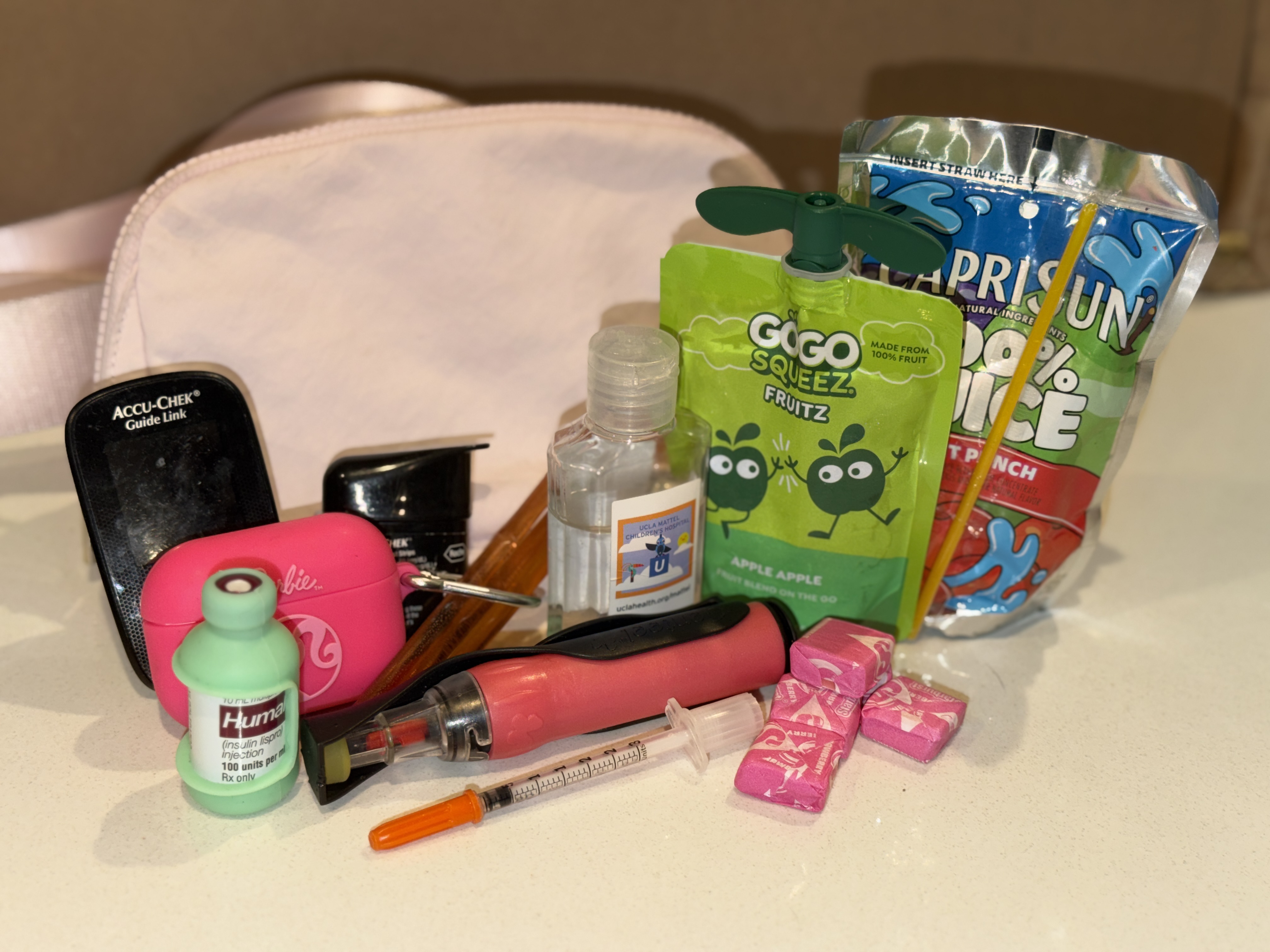
During training, I use whatever works in the moment, whether it’s juice or candy. I don’t spend too much time worrying about whether a snack is considered “healthy” or not. My priority is having something that works quickly when I need it.
When I first started, I needed at least two juice packs, plus smaller candies throughout the run. Now, I’m usually down to only one juice pack.
Wearing it my way
I typically clip my Flex pump to the waistband of my running bottoms. For the most part, it stays out of the way. Sometimes it may interfere with my bag that holds all my low snacks, but moving the pump to the back of my pants usually solves the problem.
I love that the MiniMed Flex is slimmer than previous pumps. But honestly, I showcase my pump on a regular basis. I love fun, decorative devices, so hiding the pump or keeping it discreet is not my style!
A perfect run (Yes, really)
So far, I have had one perfect workout session — no lows, no highs. I “prepared” for my run with a brownie, set Temp Target for 2 hours and began running. During the run, I received a few “Alert Before Low” alerts and treated them with honey sticks or candy.
By the end of the run, my sensor glucose was about 110 mg/dL, and I never went below 90 mg/dL.
I sometimes feel anxious about going high or low before a workout. I manage that by telling myself that it will happen and I will be prepared. My fanny pack is always stocked with juice, candy, an insulin vial, and a syringe. I try to hydrate before and after each run, and I give myself permission to take a break when I need one. Taking a break doesn’t mean it will stop my progress. My goal is simply to finish.
Around the clock: Post-workouts and overnight
The MiniMed Flex has worked spectacularly after my workouts. Alert before low and Meal DetectionTM technology‡ have both come in handy. After a run, I’m usually ready to eat the first thing I see - and I don’t always remember to bolus right away after a run.
Overnight, my biggest guardian is Jolo and his super nose. But the MiniMed Flex alerts on my phone have helped make my fiancé aware when I need support. It’s hard to ignore multiple devices — pump, fitness watch, both of our phones — and a dog alerting at 3 a.m.
The power of a support system
I have always been very open and transparent about my diabetes. I feel safer when the people around me understand what’s going on and know how to help. I love that my family can follow my CGM and pump information through the CareLinkTM Connect app on their phones and receive notifications - even if I sometimes do limit their access for my own sanity. 😊
MiniMed Flex makes it easier for my family to stay informed, giving them — and me — an added sense of security. I also know that if I miss an alert on my phone, I have additional alerts from my pump and Apple Watch.
My biggest piece of advice
One of my biggest pieces of advice for anyone living with diabetes is to remember that we are all different. What works for me today may not work for you. It may not even work for me tomorrow. You have to find the devices, supplies, routines and support that work for you.
My biggest takeaway has been to give yourself - and your system - time. I’ve been a MiniMed pump user for over 15 years and I’m truly happy with the technology, algorithms, and support I receive. But I also know that everything takes time. Anytime I upgrade to a new MiniMed pump system, I give myself time to adjust. I understand that everything may not work perfectly right away, and that’s ok.
We all have different journeys and paths in life, even without diabetes. We have to approach our chronic illnesses and disabilities with that same understanding. My progress is not a tutorial for yours.
A FLEX worth celebrating
Not only am I running a marathon for the first time — I’m running for the first time. I’m also consistently exercising for the first time since I was a teenager.
As a model and actress, I hear “no” at least 50 times a day. To anyone who has been told that they cannot do something, I always say two things:
1. That’s okay!
2. Sometimes, something just needs to be adjusted.
For me, MiniMed Flex has taken those “no’s” and turned them into “yes, just different”. This year, my diabetes is celebrating its 20th birthday by showing the world that people with diabetes are capable of anything, and honestly that’s a FLEX! (cringe)
Footnotes
† WARNING: Do not use the Suspend before low or Suspend on low features to prevent or treat low glucose. Always follow the instructions of a healthcare professional to treat low glucose. Using Suspend before low or Suspend on low features to prevent or treat low blood glucose (BG) may result in prolonged hypoglycemia.
‡ Taking a bolus 15-20 min before a meal provides significant improvement in post meal control.
Important Safety Information: MiniMed FlexTM system with SmartGuardTM technology with Simplera SyncTM sensor and Instinct sensor
The MiniMed FlexTM system is intended for the continuous delivery of basal insulin at selectable rates, and the administration of insulin boluses at selectable rates for the management of type 1 diabetes mellitus in persons 7 years of age and older, and of type 2 diabetes mellitus in persons 18 years of age and older requiring insulin. The system is also intended to continuously monitor glucose values in the fluid under the skin.
The MiniMed FlexTM system includes SmartGuardTM technology, which can be programmed to automatically adjust insulin delivery based on continuous glucose monitoring (CGM) sensor glucose values and can suspend delivery of insulin when the SG value falls below or is predicted to fall below predefined threshold values. The system is intended for use with connected sensors, including the Simplera SyncTM sensor and integrated continuous glucose monitors, including the Instinct sensor, each of which has different wear-time, form factor, insertion site, and other distinguishing characteristics that relate to sensor performance. Consult the appropriate sensor user guide when using the system. Discuss treatment decisions with your HCP.
WARNING: Do not use the SmartGuardTM feature for people who require less than 8 units or more than 250 units of total daily insulin per day. A total daily dose of at least 8 units, but no more than 250 units, is required to operate in the SmartGuardTM feature.
WARNING: Do not use the MiniMedTM Flex system until appropriate training has been received from a healthcare professional. Training is essential to ensure the safe use of the MiniMedTM Flex system.
WARNING: Do not use SG values to make treatment decisions, including delivering a bolus, while the pump is in Manual Mode. When the SmartGuardTM feature is active and you are no longer in Manual Mode, the pump uses an SG value, when available, to calculate a bolus amount. However, if your symptoms do not match the SG value, use a blood glucose (BG) meter to confirm the SG value. Failure to confirm glucose levels when your symptoms do not match the SG value can result in the infusion of too much or too little insulin, which may cause hypoglycemia or hyperglycemia.
Pump therapy is not recommended for people whose vision or hearing does not allow for the recognition of pump signals, alerts, or alarms. The safety of the MiniMed FlexTM system has not been studied in pregnant women or in persons using other anti-hyperglycemic therapies that do not include insulin. For complete details of the system, including user guides and important safety information such as indications, contraindications, warnings and precautions associated with system and its components, see https://link.minimed.com/Risks.
©2026 Medtronic MiniMed, Inc. MiniMed and MiniMed logo are trademarks of Medtronic MiniMed, Inc. The sensor shape and appearance, Abbott, and “a” logo are marks and/or designs of the Abbott group of companies in various territories and used under license. Sensor image ©2026 Abbott. TM*Third–party brands are trademarks of their respective owners.