.png)


Top 10 questions about MiniMed Go — Answered

Heard about MiniMed GoTM and want to know more? You're not alone.
Whether you're newly diagnosed, thinking about switching systems, or looking into options for someone you care for — you deserve clear answers. We've gathered the 10 most common questions about MiniMed Go and answered them all in one place.
So let's go!
1. How is MiniMed Go different from an insulin pump?
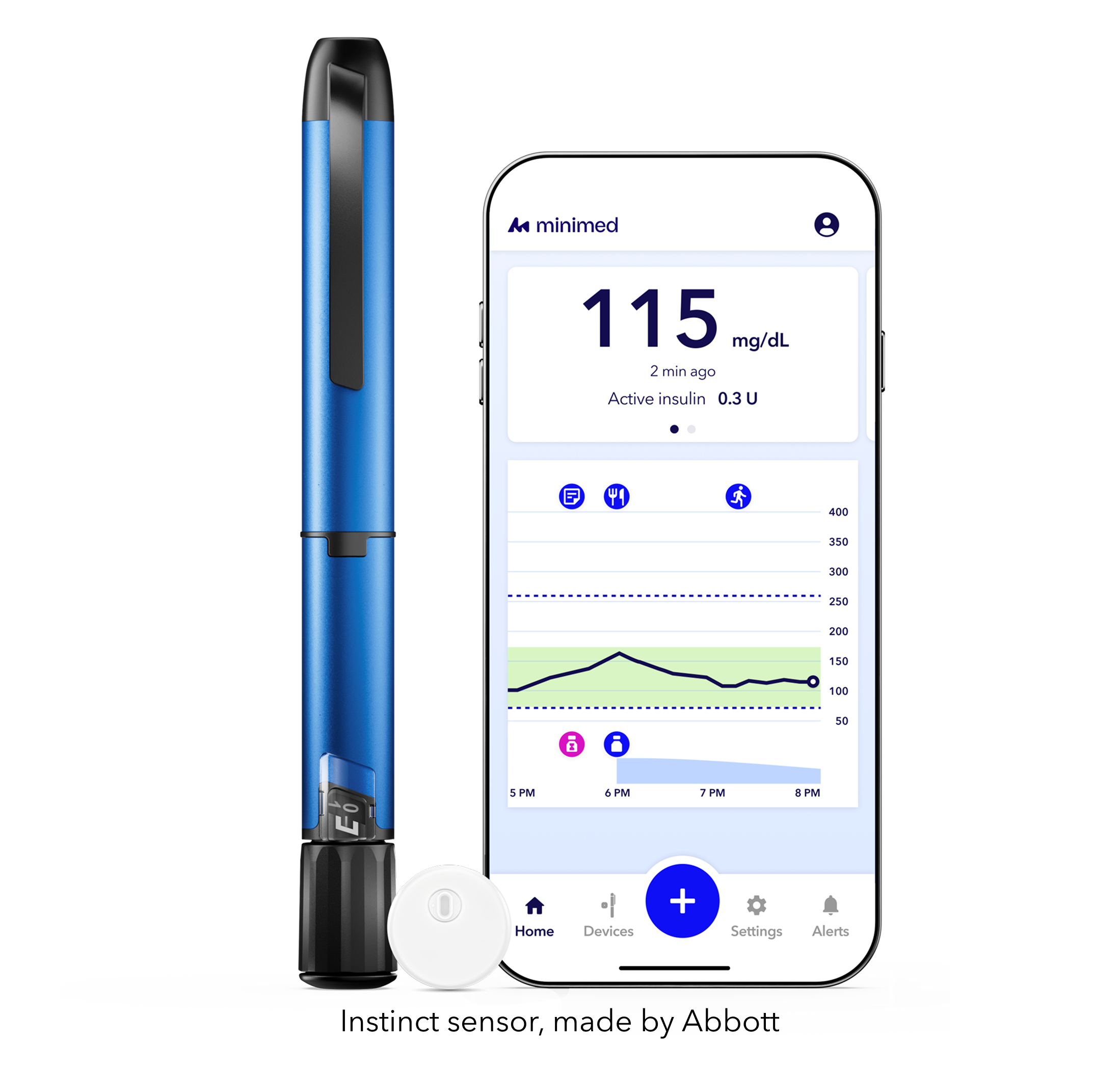
MiniMed Go is not an insulin pump. It's a system for people who inject insulin by hand — also called multiple daily injections, or MDI.
What makes MiniMed Go special is how smart it makes every injection decision.
The system has three parts:
- The InPenTM smart insulin pen
- A compatible continuous glucose monitor (CGM)
- The MiniMed Go app
Together, they track your glucose around the clock, keep track of your doses, and tell you when you need more insulin — and exactly how much.1
For people who inject, it's the closest thing to having a personal guide in your pocket, every single day.
2. How accurate are the dose recommendations?
MiniMed Go doesn't just recommend a dose — it recommends the right dose, exactly when you need it.
Every recommendation factors in your:
- Current glucose level
- How much insulin is still working in your body
This helps you avoid taking too much insulin and reduces the risk of lows.1 Miss a meal bolus? Not sure how many carbs you ate? The system will alert you and tell you what to do next.1,2,3
The results speak for themselves: Multiple studies have shown that Time in Range (TIR) can approach or exceed 70% for users of CGM and InPen who respond promptly to alerts.4,5,6
3. Which CGMs work with MiniMed Go?
MiniMed Go works with the Instinct sensor, made by Abbott.
Small, discreet, and comfortable7 to wear — with just a one-hour warm-up period.
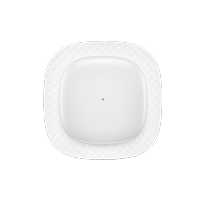
MiniMed Go also works with the SimpleraTM sensor.
4. Will MiniMed Go work with my phone?
The MiniMed Go app is available on both iOS and Android — so it works with a wide range of smartphones.
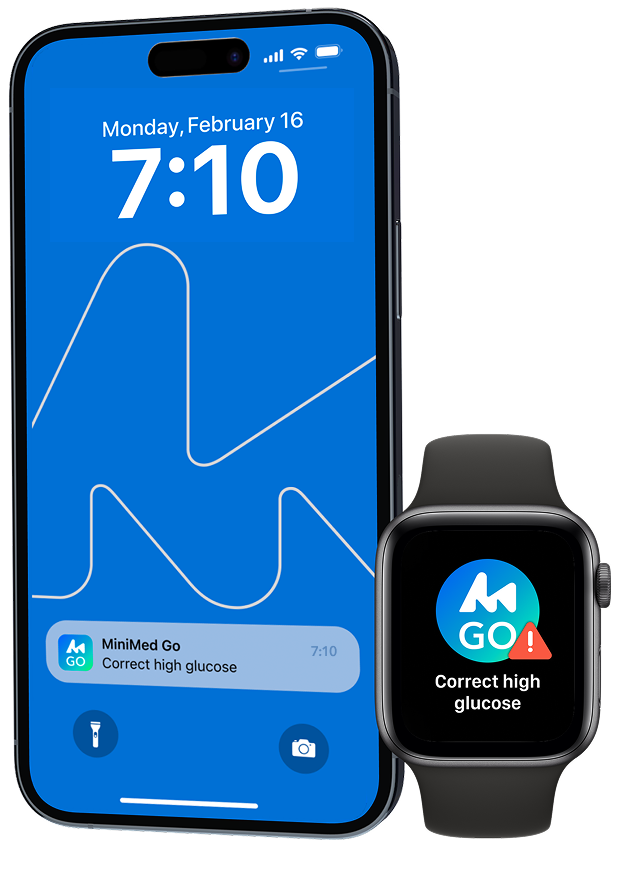
Smart devices sold separately
Once connected, your phone becomes the hub for your whole system:
- Real-time glucose readings from your sensor
- Dose calculations and recommendations
- A full log of your insulin history
Have an Apple Watch? You can see your glucose data and alerts right on your wrist, no need to check your phone.
Check the device compatibility list (click on MiniMed Go tab) to make sure your phone is supported. No compatible phone? An App Manager lets you use the MiniMed Go app without a smartphone.
5. What happens if Bluetooth disconnects?
Bluetooth interruptions happen. Here's what MiniMed Go does when they do:
- 🔔 Alerts: When a Bluetooth or sensor connection is lost, the app notifies you with a clear alert and guides you through restoring connectivity quickly.
- 🛡️ Safety default: During a disconnection, the sensor continues collecting Sensor Glucose (SG) values in the background. SG values are temporarily stored until the connection is restored. No data is lost — the system keeps working silently behind the scenes.
- 🔄 Reconnection: When connection is restored with the sensor, the app will backfill missing SG values and will continue operating as normal.
6. Can my family or doctor see my MiniMed Go data?
Absolutely — and it's easier than you might think.
MiniMed Go connects to CareLinkTM Personal, a free online platform that automatically pulls data from your devices — insulin pen, CGM, blood glucose meter — and turns it into clear, easy-to-understand reports. You can use these reports at doctor visits or to track your own progress.
Here’s how sharing works:
| Who | How they access it | What they can see |
| 🩺 Clinicians | CareLink Personal software | Full reports and insights |
| 👪 Family or caregivers | CareLink Connect app | Insulin doses and actionable alerts |
7. Is it worth upgrading to the MiniMed Go system if I already use the InPen with the InPen app?
Yes — and here's why.
If you use InPen with the Simplera CGM, switching to MiniMed Go means you get one app for everything. The MiniMed Go app is replacing both the InPen app and the Simplera app. All your data in one place — simpler and easier to manage.
If you use InPen on its own, upgrading to the full MiniMed Go system is worth thinking about.
InPen is a great start. But adding a CGM gives you continuous glucose readings — not just a number here and there, but a full picture of where your glucose is and where it's heading. Add automatic alerts for highs and lows — even overnight — and you stop reacting to your diabetes and start staying ahead of it.
Think of it less like switching, and more like finally getting the full picture.
8. How much does MiniMed Go cost — and will insurance cover it?
MiniMed Go is covered by major commercial health plans and is available at your pharmacy.
Here's what you can expect to pay:
- Instinct sensors: As little as $60/month — savings apply automatically if your copay is higher.
- InPen smart insulin pen: As little as $125 (average copays range from $30–$90) — one pharmacy copay covers a pen that lasts a full 12 months.
If your copay is higher than these amounts, savings are applied automatically. No extra steps needed.
Have questions about your coverage? Call 1-800-MINIMED.
Terms and conditions apply.
9. How hard is MiniMed Go to set up?
Good news — MiniMed Go was built to be simple.
Everything you need to get started is right in the app. You can set up at your own pace — whenever works best for you. Setup comes down to four steps:
- Download the MiniMed Go app on your compatible iOS or Android device
- Set up the app with your personal information and therapy settings
- Connect your InPen and glucose sensor via Bluetooth
- Set up your alerts and notifications
Need help along the way? MiniMed Go's training resources are there to help you feel confident from day one.
And once you're up and running, you're never on your own — 24/7 support is always just a call away.
10. Is MiniMed Go suitable for type 2 diabetes?
Generally, yes — and this is a common misconception worth clearing up.
For a long time, advanced diabetes technology felt like it was only made for people with type 1 diabetes. But the truth is — many people with type 2 are on multiple daily injections too. Managing those doses can be just as hard, no matter your diagnosis.
MiniMed Go is designed to be simple and easy to use. It's a great fit for people with type 2 diabetes who:
- Are already on or getting started taking mealtime insulin doses
- Want better visibility into their glucose – all in one app
- Wanting smarter dosing support to take the guesswork out of insulin management
- Ready to move beyond a standalone pen to a more connected system
The InPen smart insulin pen is a great fit for people with type 2 diabetes — discreet, easy to use, and often less intimidating than traditional syringes, while also providing dose tracking and reminders that standard insulin pens can't offer. Add a CGM and you go from occasional glucose snapshots to a complete, continuous picture — giving you and your care team what you need to make better decisions, every day.
Always consult with your healthcare provider before making changes to your diabetes management.
Ready to learn more?
MiniMed Go makes it easier to manage your diabetes — whether you're just getting started or thinking about switching systems.
The best next step? Talk to your healthcare professional — and take a closer look at what MiniMed Go can do for you.
References
- Proper pairing, connectivity, and settings required. Talk to your healthcare professional before establishing and changing your settings. Ensure that all doses taken with InPen are logged in the app, that all doses taken with a device other than InPen are logged manually in the app, and that glucose and meal information entered into the dose calculator are current and accurate. Not doing so can result in incorrect dosing, hypoglycemia or hyperglycemia, and serious injury.
- Data on File. (REP-01250 actionability of MiniMed Go alerts).
- Why CGM alone is not enough: low actionability of CGM alerts without considering impact of active insulin. M.B. Smith, G. Im, J. MacLeod, R.A. Vigersky; Abstract #758. 59th annual EASD meeting 5 Oct 2023. (actionability of CGM alerts).
- Laurenzi A, et al. Insights into the effective use of the Smart MDI system: Data from the first 1852 type 1 diabetes users. Diabetic Medicine, 13Oct2025. N=1852. for MDA, r=0.28, P<0.001. for CHGA, r=0.45, P<0.001.
- Smith M, et al. Glycemic impact of meal-dosing behaviors in users of the InPen smart insulin pen paired with continuous glucose monitor. ADA Scientific Sessions, 2023, Oral Presentation. (N=5123, r=0.59, P<0.001)
- Past performance does not necessarily correlate with future results. There are many factors. Individual results may vary.
- Data on file, Abbott Diabetes Care, Inc.
InPen Copay Program terms and conditions
- Open to insured patients and patients with commercial prescription insurance and those who are not enrolled in any government-funded program that pays for prescription devices or treatments.
- Excluded participants include patients enrolled in any federal, state, or government-funded healthcare program such as Medicare, Medicare Advantage, Medicare Part D, Medicaid, Medigap, Veterans Affairs (VA), the Department of Defense (DoD) or TRICARE® that provides coverage for InPen, or where prohibited by law.
- Cash Discount Cards and other non-insurance plans are not valid as primary under this offer.
- Offer subject to change or discontinue without notice. This is not health insurance.
- Offer applies to a maximum of 1 prescribed InPen per Patient per benefit year.
- Offer good only in the USA at participating pharmacies and cannot be redeemed at government-subsidized clinics.
Important safety information: MiniMed Go system
The MiniMed Go system includes the MiniMed Go app, InPen smart insulin pen injector and either the Instinct continuous glucose monitoring (CGM) sensor or Simplera CGM sensor. The system is intended to aid in diabetes management through multiple daily injections of compatible rapid-acting insulins (Humalog, Novolog, or Fiasp). The app and system components each require a prescription. When used with Instinct CGM, the app is indicated for patients ages 7 years and older, or patients ages 2 to 6 years under the supervision of an adult caregiver. When used with Simplera CGM, the app is indicated for patients ages 18 and over. If using InPen alone, the app is intended for all ages, with patients under age 7 requiring supervision. Use of these systems requires, among other things, adequate hearing and vision, a compatible mobile device and operating system, an open app, adequate pairing and connectivity, proper setting, use of an approved rapid-acting insulin, mobile device battery power, proper settings, accurate manual logging of insulin doses administered by means other than InPen, and occasional blood glucose meter (BGM) readings. Establishment of settings and treatment decisions should be made in consultation with a healthcare professional and on the basis of a combination of glucose readings, trend arrows, glucose target, active alerts, and recent events (such as insulin doses, exercise, meals, and medications). Failure to observe these and other details as found in the user guides can result in incorrect dosing, missed alerts and notifications, and ultimately hypoglycemia or hyperglycemia, with serious injury or death possible. For additional safety information and user guides, see https://link.minimed.com/Risks.
©2026 Medtronic. MiniMed and MiniMed logo are trademarks of Medtronic MiniMed, Inc. The sensor shape and appearance, Abbott, and "a" logo are marks and/or designs of the Abbott group of companies in various territories and used under license. Sensor image ©2026 Abbott. ™*Third–party brands are trademarks of their respective owners.