.png)


Diabetes fatigue is real — Here's why your current routine might be making it worse
Published: August 18, 2026 Read time: 5 mins

Every day. Every meal. Every number.
You wake up. Before you've had your first sip of coffee, your mind is already calculating.
What was my glucose overnight? Did I take my insulin last night? What am I having for breakfast — and how much insulin do I need? Should I account for that walk I'm planning later? What if my glucose drops around 11 a.m. again?
And it's only 7:04 in the morning.
If you're living with diabetes — especially managing it with multiple daily injections (MDI) — this mental workout isn't just tiring. It never stops. And if you've ever thought, "I'm just so tired of all of this," we want you to know something important:
You're not weak. You're not failing. You're burned out. And there's a reason why.
What is diabetes burnout?
Diabetes burnout is when the constant demands of managing your diabetes leave you feeling overwhelmed, exhausted, or just... done. It's not about giving up or not caring. It's what happens when your brain is asked to make an estimated 180+ diabetes-related decisions every single day1 — and do it perfectly, forever, with no days off.
Research shows that up to 45% of people with type 1 diabetes — and many with type 2 — experience symptoms of diabetes burnout or distress at any given time.2,3,4 That's not a small number. That's nearly half of people quietly struggling, often too afraid or embarrassed to say how exhausted they really feel.
The hidden weight of MDI management
Multiple daily injections have helped millions of people manage their diabetes for decades. But the daily routine that comes with MDI carries a heavy mental load that builds up over time — and it's easy to underestimate just how much it takes out of you.
Here's a look at what MDI management asks of you every single day:
The daily mental load
| Task | Frequency | Mental demand |
|---|---|---|
Counting carbs and estimating portions | Every meal & snack | 🔴High |
Calculating your insulin dose | Every meal & snack | 🔴High |
Checking your glucose | Multiple times daily | 🟡Moderate |
Logging your readings | Multiple times daily | 🟡Moderate |
Tracking injection sites | Every injection | 🟢Low–Moderate |
Adjusting for exercise | Variable | 🔴High |
Remembering your basal insulin timing | Once or twice daily | 🟡Moderate |
Managing illness, stress, travel | As needed | 🔴Very High |
Looking for patterns and adjusting | Weekly or more | 🔴High |
Every single one of these tasks needs your attention, your judgment, and your memory — day after day, year after year.
Scientists call this kind of mental effort cognitive load — how hard your brain has to work to process information and make decisions. Every glucose reading needs to be understood. Every meal involves mental math. Every injection needs to be tracked. And every unexpected high or low turns into a troubleshooting session that can lead to frustration, anxiety, and self-blame.
This is not a personal shortcoming. This is a problem with the traditional MDI system itself.
Why so many decisions make you so tired
You may have heard the term "decision fatigue." It describes how our ability to make good decisions gets worse the more decisions we have to make. It's why candy bars are placed at the checkout line — your willpower is lower after a long shopping trip.
For people on traditional MDI, decision fatigue isn't just occasional. It's built into the daily routine.
Burnout is often your body's way of saying: this system isn't working for me anymore.
The feelings nobody talks about enough
Diabetes burnout isn't just about numbers and charts. It lives in the feelings you carry every day — often quietly, often alone:
• 🙁Guilt after a high reading, even when you did everything right
• 😟Anxiety about going to bed not knowing what your overnight numbers will do
• 😞Isolation from feeling like no one around you truly understands how much work this takes
• 😣Resentment toward your condition — or toward the tools that feel like just more things to manage
• 😩Grief from knowing there's no finish line. No break. No cure right now.
These feelings are valid. They are human. And they are incredibly common among people managing diabetes with intensive insulin routines.
Why your current routine might be part of the problem
Not all approaches to diabetes management are equally hard on your mental health.
Traditional MDI management relies heavily on you doing the work:
• Manual data collection — finger sticks, written or app-based logs
• Self-performed calculations — carb ratios, correction doses, totals
• Human memory — injection timing, site rotation, dose history
• Looking back at data — reviewing past numbers to make future decisions
Every one of these steps requires active mental energy from you — the person already living with the condition.
So, here's a question worth sitting with:
"Is my current system designed to support me — or does it require me to be the system?"
There is a better way to think about diabetes management
The good news? Diabetes technology has come a long way. There is a growing recognition — among researchers, doctors, and device makers — that modern diabetes tools should do more than improve your glucose numbers. They should improve your life.
That means tools designed to:
• Cut down on the number of decisions you have to make manually
• Automatically track your data so you don't have to
• Use smart algorithms that anticipate and adjust — not just react after the fact
• Free up your mental energy for the things that actually matter to you
Systems that connect continuous glucose monitoring (CGM) with smart insulin delivery — whether through a connected pen or an automated pump — are showing real results. Not just better glucose numbers, but measurable improvements in quality of life, treatment satisfaction, and lower diabetes distress scores.
Diabetes burnout is real. It has a name. It has research behind it. And most importantly, it has solutions.
Ready to explore what a smarter system could mean for you?

If you're managing diabetes with MDI and feeling the weight of it, it may be time to explore whether a more connected approach — one that takes on more of the mental load — could make a real difference in your daily life.
Continuous glucose monitoring and smart insulin delivery systems work together to simplify diabetes management so you can live life more freely – this is what MiniMed’s smart insulin delivery systems are designed to do.
Two options to consider
MiniMed GoTM system

MiniMed Go is a smart MDI system that combines the InPenTM smart insulin pen, CGM, and one easy-to-use app. The MiniMed Go system remembers your insulin doses, reminds you when more is needed, and recommends smart actions, so you can focus on feeling your best.5
MiniMed FlexTM system
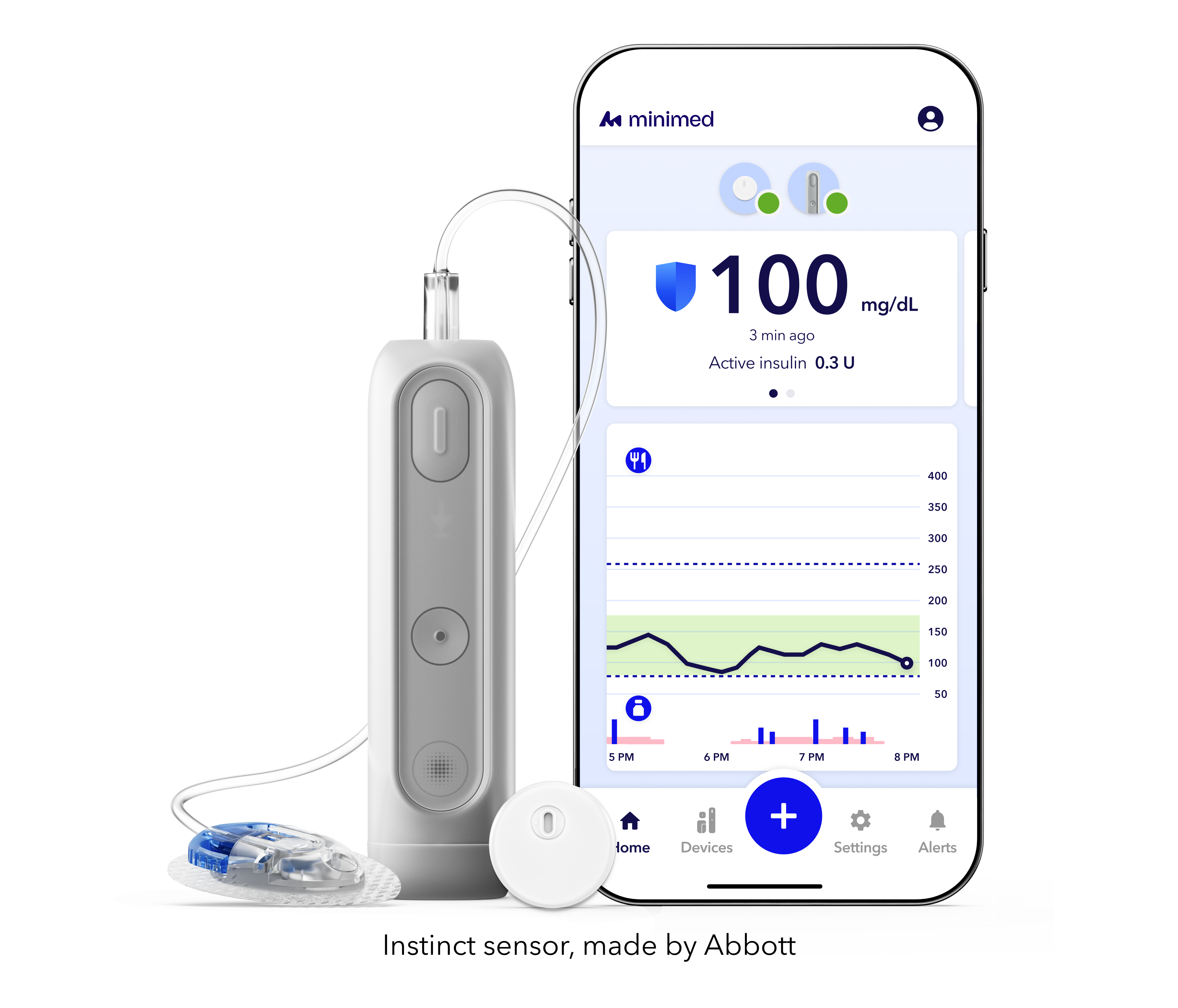
MiniMed Flex is a phone-controlled automated insulin delivery system that brings together a small insulin pump, CGM, infusion set and reservoir, and an app. Together, these features provide advanced automation, designed to give you more time living and less time managing your diabetes.
References
1. M. Peyrot, R.R. Rubin, T. Lauritzen, F.J. Snoek, D.R. Matthews, S.E. Skovlund. Psychosocial problems and barriers to improved diabetes management: results of the Cross-National Diabetes Attitudes, Wishes and Needs (DAWN) Study. Diabet Med, 22 (2005), pp. 1379-1385.
2. American Diabetes Association Professional Practice Committee. Facilitating positive health behavior and well-being to improve health outcomes: Standards of Care in Diabetes—2024. Diabetes Care. 2024;47(Suppl 1):S77-S110.
3. Fisher L, Hessler DM, Polonsky WH, Mullen J. When is diabetes distress clinically meaningful? Diabetes Care. 2012;35(20):259-264.
4. Perrin NE, Davies MJ, Robertson N, Snoek FJ, Khunti K. The prevalence of diabetes-specific emotional distress in people with type 2 diabetes: a systematic review and meta-analysis. Diabet Med. 2017;34(11):1508-1520.
5. Proper pairing, connectivity, and settings required. Prescription only. Talk to your healthcare professional before establishing and changing your settings. Ensure that all doses taken with InPen are logged in the app, that all doses taken with a device other than InPen are logged manually in the app, and that glucose and meal information entered into the dose calculator are current and accurate. Not doing so can result in incorrect dosing, hypoglycemia or hyperglycemia, and serious injury.
Important safety information: MiniMed Go system
The MiniMed Go system includes the MiniMed Go app, InPen smart insulin pen injector and either the Instinct continuous glucose monitoring (CGM) sensor or Simplera CGM sensor. The system is intended to aid in diabetes management through multiple daily injections of compatible rapid-acting insulins (Humalog, Novolog, or Fiasp). The app and system components each require a prescription. When used with Instinct CGM, the app is indicated for patients ages 7 years and older, or patients ages 2 to 6 years under the supervision of an adult caregiver. When used with Simplera CGM, the app is indicated for patients ages 18 and over. If using InPen alone, the app is intended for all ages, with patients under age 7 requiring supervision. Use of these systems requires, among other things, adequate hearing and vision, a compatible mobile device and operating system, an open app, adequate pairing and connectivity, proper setting, use of an approved rapid-acting insulin, mobile device battery power, proper settings, accurate manual logging of insulin doses administered by means other than InPen, and occasional blood glucose meter (BGM) readings. Establishment of settings and treatment decisions should be made in consultation with a healthcare professional and on the basis of a combination of glucose readings, trend arrows, glucose target, active alerts, and recent events (such as insulin doses, exercise, meals, and medications). Failure to observe these and other details as found in the user guides can result in incorrect dosing, missed alerts and notifications, and ultimately hypoglycemia or hyperglycemia, with serious injury or death possible. For additional safety information and user guides, see https://link.minimed.com/Risks.
Important Safety Information for MiniMed FlexTM System:
MiniMed FlexTM System is for type 1 ages 7 and over and type 2 ages 18 and over. Prescription required. WARNING: Do not use SmartGuardTM feature for people who require less than 8 units or more than 250 units of insulin/day. For additional safety information and user guides, see https://bit.ly/MiniMedRisks.