


EverythingTop 10 questions about MiniMed Flex — Answered
Published: November 4, 2026 Read time: 5 minutes
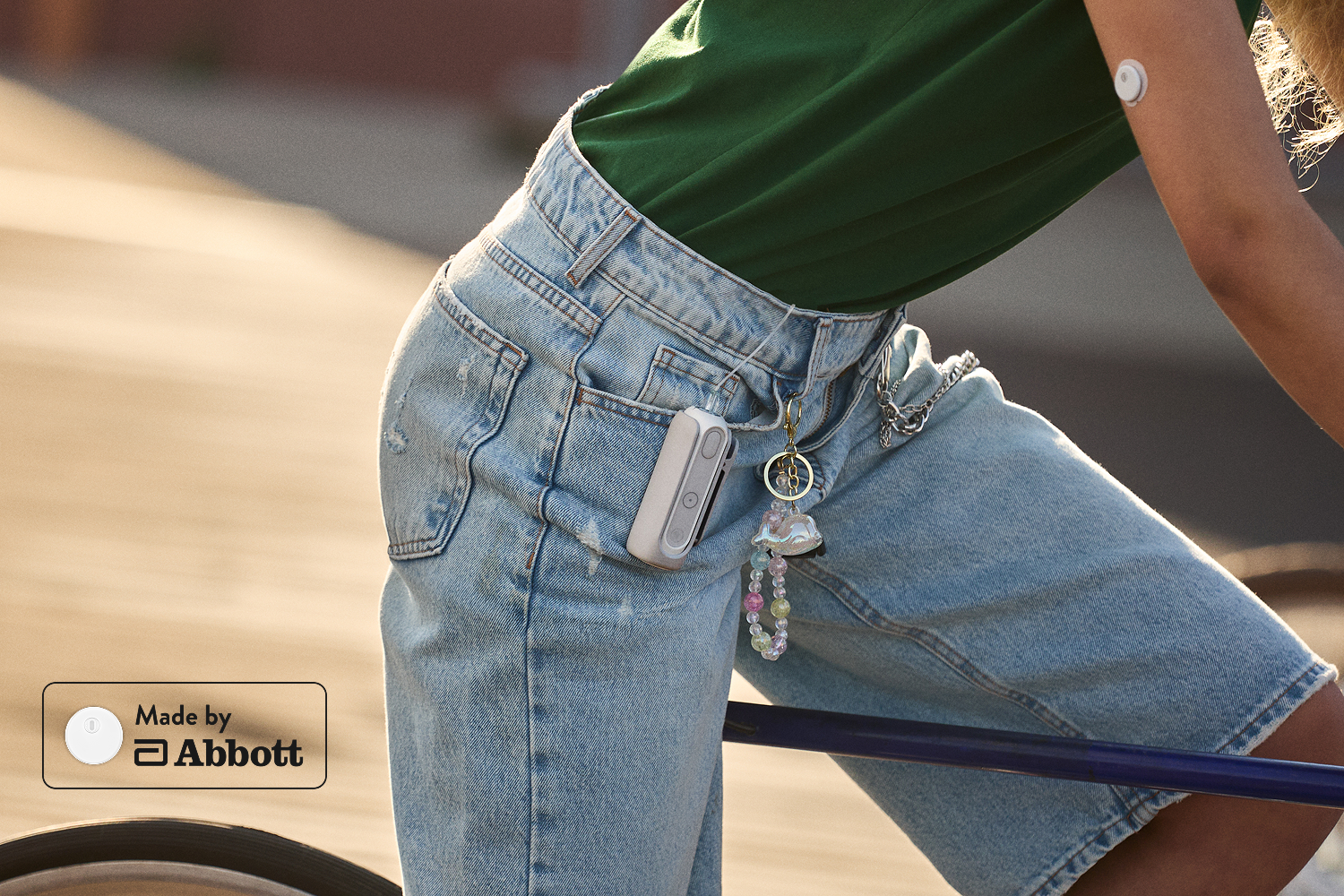
Thinking about the MiniMed FlexTM insulin pump system? You probably have questions. We’ve rounded up 10 of the questions people ask most about the MiniMed Flex system — including a few common concerns – so you can decide whether it might fit your life.
Quick links:
1. How does MiniMed Flex work without a pump screen?
2. What happens if I don't have my phone with me or my phone dies?
3. How small is MiniMed Flex — and how can I wear it?
4. How does SmartGuardTM technology work — especially if I occasionally miss a meal bolus?
5. How is MiniMed Flex different from the MiniMedTM 780G system?
6. How is MiniMed Flex different from a tubeless/patch pump?
7. How long does the battery last, and how do I charge it?
8. Can I swim, shower, exercise, or play sports with MiniMed Flex?
9. Which CGM sensors and infusion sets work with MiniMed Flex?
10. How much does MiniMed Flex cost, and will my insurance cover it?
Bonus Question
1. How does Minimed Flex work without a pump screen?
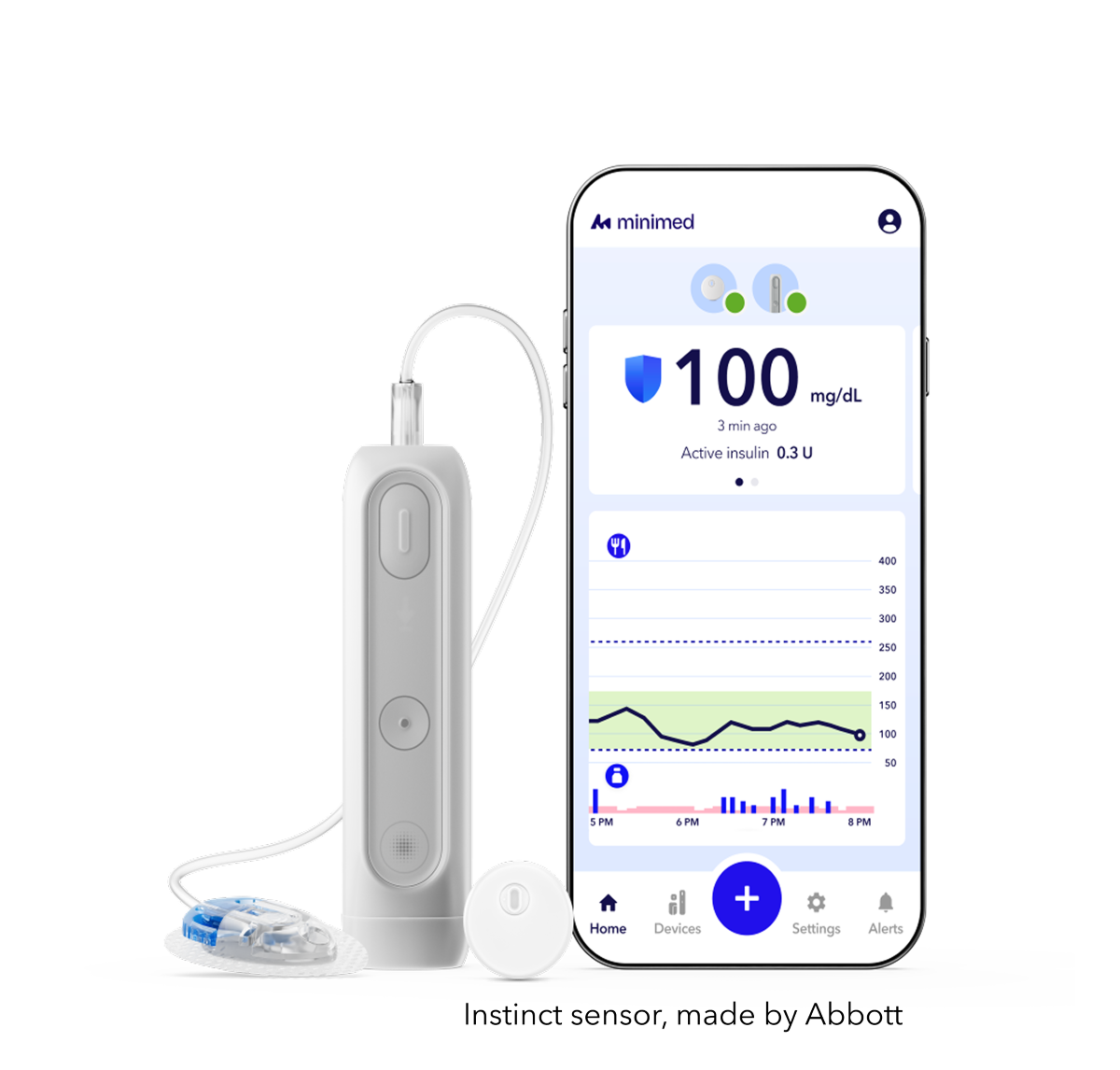
MiniMed Flex was designed to fit more seamlessly into everyday life by letting you manage your pump from something you already have in your hand: your smartphone.
Available on compatible iOS and Android devices, the MiniMedTM app let’s you deliver a bolus, see your glucose and insulin information together, manage pump settings and get important alerts — all from your phone. Before getting started, check the official MiniMed compatibility list to make sure your phone is compatible with the MiniMed Flex system.
And because you can manage more from your phone, you don’t have to pull out your pump every time you want to interact with it. MiniMed Flex can stay tucked away while you go about your day.
The idea is simple: your diabetes technology should fit into your life, not ask you to change your life around it.
2. What happens if I don't have my phone with me or my phone dies?
If your phone dies, isn’t nearby or temporarily loses connection, MiniMed Flex keeps delivering insulin based on your programmed settings. SmartGuard technology can also continue working in the background as long as your sensor and pump remain connected. And if something needs your attention, the pump itself can alert you through status lights, sounds and vibration on the pump.
You won't be able to make changes or give a bolus without your phone, so it's still a good idea to keep it nearby.
MiniMed Flex also doesn’t rely on Wi-Fi or cellular service for insulin delivery. The pump and phone communicate through Bluetooth. So, whether your phone is out of reach, out of power or you’re somewhere with poor reception, your pump can keep doing its job.
3. How small is MiniMed Flex – and how can I wear it?
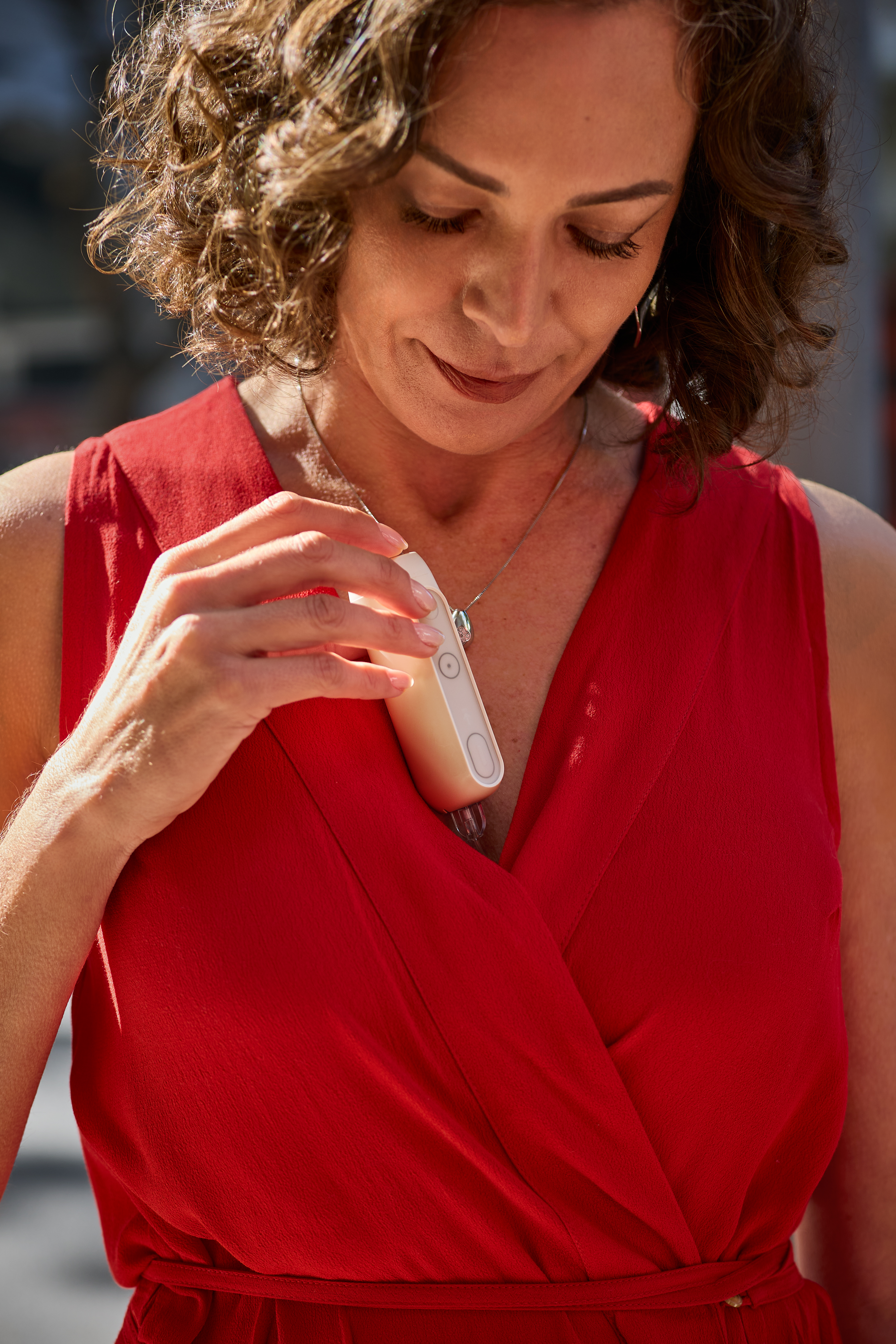
MiniMed Flex was designed to be small without asking people to give up insulin capacity. MiniMed Flex still holds up to 300 units of insulin.
And because Flex is app-controlled, you have options for how you wear it. You can:
- Clip it to your clothing
- Put it in a pocket
- Tuck it somewhere more discreet
That gives you more freedom to wear your pump in a way that works for your body, your outfit and your day.
4. How does SmartGuard technology work — especially if I occasionally miss a meal bolus?
SmartGuard technology helps take on more of the work of managing your glucose throughout the day. Using information from your sensor, SmartGuard technology automatically adjusts insulin every 5 minutes† and can give automatic correction insulin when needed.
And because meals don’t always go exactly as planned, Meal DetectionTM technology can provide extra help if you underestimate carbs or occasionally miss a meal bolus.‡ If your glucose starts rising quickly like from a meal, the system can automatically give additional correction insulin.
With recommended settings, real-world data§ showed 80% Time in Range,1 including 91% average Time in Range overnight.¶,2
5. How is MiniMed Flex different from the MiniMed 780G system?
MiniMed Flex and the MiniMed 780G system both use SmartGuard technology to automatically adjust insulin every 5 minutes and provide automatic corrections when needed.
The biggest difference is how you interact with the pump.
MiniMed 780G has a built-in screen and controls on the pump itself. MiniMed Flex is smaller, can be charged, and is designed to be controlled through the MiniMed app on your compatible smartphone.
So, if you like what SmartGuard technology does, but want a smaller, app-controlled pump, MiniMed Flex gives you a different way to experience it.
6. How Is MiniMed Flex different from a tubeless/patch pump?
The biggest difference is how the pump is worn — and the flexibility that gives you throughout your day.
Tubeless or patch pumps are worn directly on the body for the life of the pod. MiniMed Flex connects to an infusion site through tubing, so you can move the pump to different places on your clothing, temporarily disconnect it and reconnect to the same insertion site later as you need.
That can come in handy when your day doesn’t go exactly as planned. Keep it in a pocket during the day, clip it somewhere else for a workout, or tuck it away more discreetly when you’re getting dressed up for dinner.

There’s also the question of how often you want to change your insertion site. Many pump infusion sites or pods are changed every 2–3 days. With the ExtendedTM infusion set, you can wear the same infusion set for up to 7 days — meaning one infusion-set insertion a week instead of changing your site several times.
When comparing pumps, think beyond tubing: How often do you want to change your site? And do you want the flexibility to move or remove your pump without starting over?”
7. How long does the battery last, and how do I charge it?
MiniMed Flex is rechargeable, and about 30 minutes of charging gives you 7 days of battery life. Your MiniMed Flex pump will come with everything you need to charge it, including the charging base, charging cord and wall plug.
When it’s time to charge, you can temporarily disconnect the pump — or charge it while you’re still connected if that works better for you.
That makes it easy to fit charging into your routine without adding another daily task.
8. Can I swim, shower, exercise, or play sports with MiniMed Flex?
Yes. MiniMed Flex was designed to keep up with active, everyday life – including swimming, showering, or getting caught in the rain.
The pump is waterproof up to 8 feet (2.4 meters) for 1 hour and 45 minutes if you choose to stay connected while in water. Continuous glucose monitor (CGM) readings may not be transmitted from the CGM to the pump while in water.
If you decide to temporarily disconnect your pump during water activities, you can reconnect to the same insertion site afterward if you prefer.
For exercise or more active days, SmartGuard technology lets you set a temporary glucose target of 150 mg/dL for times when you may need less insulin. Auto corrections pause while Temp Target is active and resume when it ends. Talk with your healthcare team about when and how to use Temp Target for your activity routine.
9. Which CGM sensors and infusion sets work with MiniMed Flex?
MiniMed Flex gives you two CGM sensor options, so you can choose the one that fits your routine best.
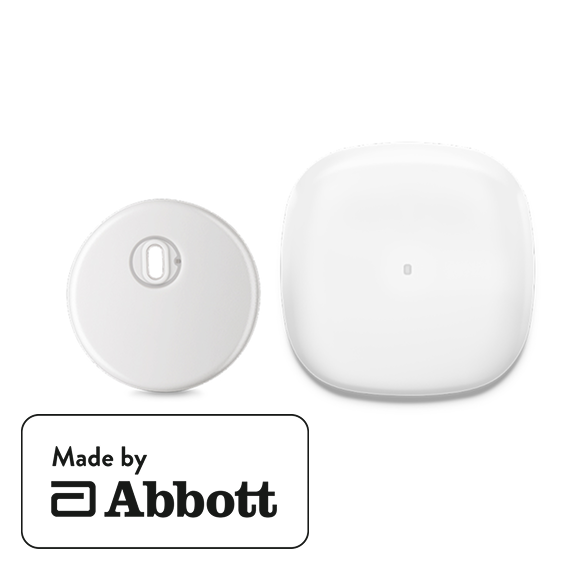
- Instinct sensor, made by Abbott — A small, discreet3 and comfortable4 to wear sensor that lasts up to 15 days.
- Simplera SyncTM sensor — An all-in-one disposable sensor giving you a once-a-week change with up to 6 days of wear, plus a 24-hour grace period.
No matter which sensor you choose, it works with the same SmartGuard technology.
You also have several infusion set options to choose from. These include sets that go in at a 90-degree or 45-degree angle, plus a steel cannula option. If longer wear is important to you, the ExtendedTM infusion set can be worn for up to 7 days — twice as long as any other infusion set on the market.◊
Explore MiniMed infusion set options.
10. How much does MiniMed Flex cost, and will my insurance cover it?
What you pay for MiniMed Flex depends on your insurance coverage, deductible and benefits.
The good news is you don’t have to figure it all out on your own. MiniMed can check your medical and pharmacy coverage and help you understand your options and what you may pay.
MiniMed can also help you get everything but the insulin for your therapy including your pump, CGM sensors, infusion sets and reservoirs. You’ll continue to get your insulin separately from your pharmacy. Depending on your coverage, some products may come from MiniMed or another supplier.
And if cost is a concern, there may be options to help. You may qualify for monthly payment plans or other financial support programs to make getting started more manageable.
📞 Speak to a specialist to explore your options.
Bonus: What does switching to the MiniMed Flex system actually involve?
Switching to an insulin pump system doesn’t have to be complicated. MiniMed helps you through each step.
Step 1: Check your coverage
MiniMed can check your medical and pharmacy coverage and help you understand your options and what you may pay.
Step 2: Talk to your healthcare team
Your healthcare team can help you decide if MiniMed Flex is right for you. If you want to move forward, MiniMed can help with the prescription process and work with your healthcare team as needed.
Step 3: Get your pump and supplies
MiniMed helps you with your order shipment and lets you know what to expect for your pump, sensor and pump supplies.
Step 4: Complete training & setup
Before you start, you'll get hands-on training on your insulin pump system, the app, your sensor and SmartGuard technology.
Then you’re ready to get started! 🎉
From checking coverage to getting your pump and completing training, MiniMed is here to help make getting started easier.
Still have questions?
That's exactly what we're here for.
Reach out to a MiniMed specialist
Important Safety Information: MiniMed FlexTM system with SmartGuardTM technology with Simplera SyncTM sensor and Instinct sensor
The MiniMed FlexTM system is intended for the continuous delivery of basal insulin at selectable rates, and the administration of insulin boluses at selectable rates for the management of type 1 diabetes mellitus in persons 7 years of age and older, and of type 2 diabetes mellitus in persons 18 years of age and older requiring insulin. The system is also intended to continuously monitor glucose values in the fluid under the skin.
The MiniMed FlexTM system includes SmartGuardTM technology, which can be programmed to automatically adjust insulin delivery based on continuous glucose monitoring (CGM) sensor glucose values and can suspend delivery of insulin when the SG value falls below or is predicted to fall below predefined threshold values. The system is intended for use with connected sensors, including the Simplera SyncTM sensor and integrated continuous glucose monitors, including the Instinct sensor, each of which has different wear-time, form factor, insertion site, and other distinguishing characteristics that relate to sensor performance. Consult the appropriate sensor user guide when using the system. Discuss treatment decisions with your HCP.
WARNING: Do not use the SmartGuardTM feature for people who require less than 8 units or more than 250 units of total daily insulin per day. A total daily dose of at least 8 units, but no more than 250 units, is required to operate in the SmartGuardTM feature.
WARNING: Do not use the MiniMedTM Flex system until appropriate training has been received from a healthcare professional. Training is essential to ensure the safe use of the MiniMedTM Flex system.
WARNING: Do not use SG values to make treatment decisions, including delivering a bolus, while the pump is in Manual Mode. When the SmartGuardTM feature is active and you are no longer in Manual Mode, the pump uses an SG value, when available, to calculate a bolus amount. However, if your symptoms do not match the SG value, use a blood glucose (BG) meter to confirm the SG value. Failure to confirm glucose levels when your symptoms do not match the SG value can result in the infusion of too much or too little insulin, which may cause hypoglycemia or hyperglycemia.
Pump therapy is not recommended for people whose vision or hearing does not allow for the recognition of pump signals, alerts, or alarms. The safety of the MiniMed FlexTM system has not been studied in pregnant women or in persons using other anti-hyperglycemic therapies that do not include insulin. For complete details of the system, including user guides and important safety information such as indications, contraindications, warnings and precautions associated with system and its components, see https://link.minimed.com/Risks.
©2026 Medtronic MiniMed, Inc. MiniMed and MiniMed logo are trademarks of Medtronic MiniMed, Inc. The sensor shape and appearance, Abbott, and “a” logo are marks and/or designs of the Abbott group of companies in various territories and used under license. Sensor image ©2026 Abbott. TM*Third–party brands are trademarks of their respective owners.